The Situation we got us Facing
It is true that many of America’s Jews are searching for their religious and spiritual -identities, and as a result, they are floating somewhere in between enlightenment and confusion. However, in their search, Orthodox Judaism, which is the religion of our foremothers and foremothers seems to be the last option, if it is an option at all. Why is that American Jews are seemingly so quick to discard their Judaism? The way I see it, there are three answers. My dad suggested the first one to me. He has often told me about the rabbi whom he ran into at a young age, and when he asked him a question about something, the rabbi’s reaction was angry and severe. In this light, even though it is just an example, this attitude is unhelpful.
But not everyone has had experiences like that, in fact, I’d speculate that more young Jews have had far more positive experiences with rabbi’s than negative. So what’s our excuse? This brings us to the next possibility, that we have been forcibly assimilated by the governments of the countries in which we lived during the few hundred years before immigrating to America. The third possibility might not sit well with us, and that possibility is that we have assimilated on our own accord, that we have lacked the conviction, heart, and strength of soul that has been a part and parcel of what it means to be Jewish since Abraham left his home. True, much pressure was put on our ancestors to assimilate and convert, specifically in Europe and parts of the Muslim world, but our generation has never felt anything remotely similar to what our families did, yet we shy away from our religion as if it were a curse! From the first Jews to assimilate, their children and their children’s children also assimilated, and as a result, the last several generations of American Jewry have been born into assimilation, like plants in the only soil they’ve ever known.
Some of us, and I am speaking for myself as well for my first twenty two years of life, feel as if Judaism isn’t really a part of what we are and doesn’t belong to us. When that is the case, associating with Judaism is akin to walking with your eyes shut; we feel lost in our Judaism. Staying with the metaphor, if a person walking with his eyes shut can open them whenever he wants, then what keeps us from doing so?In the past, before I began my journey into Orthodox Judaism, I would observe Christians and Muslims and I saw that, for the most part, and taking into account variations in religious conviction, that they were more serious about identifying with their religion as a lifestyle and system of beliefs and not just as a culture. I was bothered by this and looked inwards to my community of Jews, wondering why we weren’t doing the same. In my mind, Judaism was true and strong and solid, and if anybody had a grip on the truth, it was we. Not to mention, our religion has affected the whole world and spawned the birth of two new religions, together which make up more than 50% of the world’s population! "Our" notion of G-d is responsible for informing more than half the world about spirituality, ethics, and truth, while a few hundred years of persecution has managed to knock us down and push us away from what is rightfully ours; our religion and our relationship with G-d. It makes very little sense.
The countries in which we have lived, both Christian and Muslim, have perpetually seen to it that we were weak and they were strong, hopefully that we would eventually submit to their religion (which came from ours!), and if we didn’t, then at least they would punish us for it. Little did they realize that a person in his right mind does not go over to the religion that has made his life a living hell; who hugs his abuser? Specifically in Christianity’s case, the love spoken about was a sham, while Islam did little to hide its abject resentment of Judaism and Jews. Nevertheless, the human will is a powerful, powerful thing – it is nothing short of being a "piece" of G-d, and if G-d can’t be discouraged, how is it that we can? The answer is that we can’t.
How do you muster the ability to respect yourself when you know that there are others who despise you? How do you see past the lies and hate that some have towards you, scratch through the surface, and reveal the truth of what it means to be a Jew in the world? And if you can’t answer that, then answer this; how long will you believe other peoples’ version of you, even the people that supposedly love you, before you tell them what you are? When we lose the ability to know what we are, it is a sign that we have cooperated with those who put their hands against us in robbing our identity. Identity is the most precious gift, a precious as life. Can it be said that life is not a gift without identity, because when life is given, identity is given with it? The relationship between life and identity is that between the sun and light; all light comes from the sun.
Friday, July 22, 2005


No Palestinian State without Muslim Reform!
Firstly, what do I mean by Muslim reform? By Muslim reform I mean the internal changes that have to happen inside of the religion of Islam before it can find acceptance or tolerance of other religions. If Muslim reform is possible, will be revealed to us at some point in time.
So the talk of the day is a Palestinian state, a place for the Palestinians to call home where they can be independent and sovereign, a Palestinian Israel, which will be very fitting if the Palestinian Israel will be in Israel.
The only problem is that Islamic terrorism is still taking place on an increasingly global scale, which strongly points to the fact that Islam is currently operating in a very destructive phase (albeit, which have several factors). How can we possibly expect a viable Palestinian state in a time where Islam has jumped off the deep end and is unable to curb the violent tendencies of its marginal few, as it is said? What is the difference between the tendencies of Islam when it comes to Moroccans, Egyptians, Pakistani’s, and Palestinians? Actually, the similarity is interesting. Just a month ago in London, English Muslims, citizens of England, carried out a series of attacks on the local English population. It was an attack from the inside by people inside for reasons having to do with something bigger, a certain type of political Muslim terrorism that has to do with bringing people to submission under Islam. This is the exact same philosophy of terror that occurs in Israel, and has been since before its inception in 1948. If a Palestinian state is created before Islam “simmers down,” just to use a politically correct term, it will function as nothing less than a base for that terrorism. What makes some people think that, "Yes, Palestinian terrorism is a problem, but it is different from the general Muslim terrorist and if you give them a state, it will stop?" News to them; if Palestinian terrorism is indeed just a form of Muslim terrorism, then a state won't make it stop. How much more international proof and inference do we need? There should be no Palestinian state.
Firstly, what do I mean by Muslim reform? By Muslim reform I mean the internal changes that have to happen inside of the religion of Islam before it can find acceptance or tolerance of other religions. If Muslim reform is possible, will be revealed to us at some point in time.
So the talk of the day is a Palestinian state, a place for the Palestinians to call home where they can be independent and sovereign, a Palestinian Israel, which will be very fitting if the Palestinian Israel will be in Israel.
The only problem is that Islamic terrorism is still taking place on an increasingly global scale, which strongly points to the fact that Islam is currently operating in a very destructive phase (albeit, which have several factors). How can we possibly expect a viable Palestinian state in a time where Islam has jumped off the deep end and is unable to curb the violent tendencies of its marginal few, as it is said? What is the difference between the tendencies of Islam when it comes to Moroccans, Egyptians, Pakistani’s, and Palestinians? Actually, the similarity is interesting. Just a month ago in London, English Muslims, citizens of England, carried out a series of attacks on the local English population. It was an attack from the inside by people inside for reasons having to do with something bigger, a certain type of political Muslim terrorism that has to do with bringing people to submission under Islam. This is the exact same philosophy of terror that occurs in Israel, and has been since before its inception in 1948. If a Palestinian state is created before Islam “simmers down,” just to use a politically correct term, it will function as nothing less than a base for that terrorism. What makes some people think that, "Yes, Palestinian terrorism is a problem, but it is different from the general Muslim terrorist and if you give them a state, it will stop?" News to them; if Palestinian terrorism is indeed just a form of Muslim terrorism, then a state won't make it stop. How much more international proof and inference do we need? There should be no Palestinian state.
Wednesday, July 20, 2005
Bizarre Insanity at it's Finest
***** This article is from www.memri.org*******
Special Dispatch Series - No. 938
July 20, 2005
No.938
U.S.-Trained Retired Lebanese General on Hizbullah TV: "Global Zionism" Behind London Bombings and 9/11
During an interview aired July 11, 2005 by Hizbullah's Al-Manar TV, retired Lebanese general and public relations expert Dr. Hisham Jaber discussed "global Zionism" and its purported hand in 9/11 and the recent London bombings.
According to his curriculum vitae, [1] Dr. Jaber, a Lebanese national who is founder and president of The Middle East Center for Studies and Public Relations, attended military studies during the 1960s in Lebanon and France. During the 1970s, he studied at the American Defense Information School at Difnos, Indiana, U.S; at Fort Bragg, North Carolina, U.S.; and at Fort Leavenworth, Kansas, U.S.
Also during the 1970s, he headed the Psychological Action Bureau at Lebanese Army headquarters. In the early 1980s, Dr. Jaber headed the Link Office of the U.S. forces and the Lebanese army. From 1997 to 2000, he was military commander of the Beirut region.
The following are excerpts from the interview (To View Clip, go to http://memritv.org/search.asp?ACT=S9&P1=763 ):
"I Believe the Events of 9/11 Were Not Planned, Prepared, Or Perpetrated by Al-Qaeda Alone"
"I have some doubts about the September [2001] events – and some articles and books share my opinion. I believe the events of 9/11 were not planned, prepared, or perpetrated by Al-Qaeda alone. Absolutely not. A force greater than Al-Qaeda was behind these events. Whenever an ordinary crime takes place, the question is 'who benefits?' – let alone when the crime is of such huge proportions. What happened in Britain, and why Britain, of all places?
"The perpetrator [of these acts] believes that he carried out an operation in retaliation for the oppression afflicted upon the world's wretched people by Western policies, and especially by the U.S. and Britain. This is what he believes. In addition, I say that the actual perpetrator – the person who actually commits a suicide operation – is not a mercenary, but may have been tricked into it.
"So who is the planner? The planner who is behind him is the one who benefits from what happens. We all know that after 9/11 the persecution of Muslims began in the U.S. and Europe, but later subsided, to a certain extent. For three or four years, we have been concerned – in the wake of these painful events – about the possibility of some sort of annihilation, or perhaps an unbalanced civil war in Europe and the U.S. between Muslims and non-Muslims, or let's say, the Westerners.
"Zionism Has Forged The New Testament; 60 Million In The U.S. Alone Have Left Christianity To Become Believers In The Torah"
"It is global Zionism that stands to gain the most from this."
"Regardless of the logic of conspiracy, I would like to say something. We read history, and we know that since The Protocols of the Elders of Zion, Zionism has forged the New Testament – and by now, 60 million in the U.S. alone have left Christianity to become believers in the Torah.
"Global Zionism has tried to forge the Holy Koran, and has printed many copies of this forgery. It has been discovered that many extremist movements were backed by [global Zionism]."
***** This article is from www.memri.org*******
Special Dispatch Series - No. 938
July 20, 2005
No.938
U.S.-Trained Retired Lebanese General on Hizbullah TV: "Global Zionism" Behind London Bombings and 9/11
During an interview aired July 11, 2005 by Hizbullah's Al-Manar TV, retired Lebanese general and public relations expert Dr. Hisham Jaber discussed "global Zionism" and its purported hand in 9/11 and the recent London bombings.
According to his curriculum vitae, [1] Dr. Jaber, a Lebanese national who is founder and president of The Middle East Center for Studies and Public Relations, attended military studies during the 1960s in Lebanon and France. During the 1970s, he studied at the American Defense Information School at Difnos, Indiana, U.S; at Fort Bragg, North Carolina, U.S.; and at Fort Leavenworth, Kansas, U.S.
Also during the 1970s, he headed the Psychological Action Bureau at Lebanese Army headquarters. In the early 1980s, Dr. Jaber headed the Link Office of the U.S. forces and the Lebanese army. From 1997 to 2000, he was military commander of the Beirut region.
The following are excerpts from the interview (To View Clip, go to http://memritv.org/search.asp?ACT=S9&P1=763 ):
"I Believe the Events of 9/11 Were Not Planned, Prepared, Or Perpetrated by Al-Qaeda Alone"
"I have some doubts about the September [2001] events – and some articles and books share my opinion. I believe the events of 9/11 were not planned, prepared, or perpetrated by Al-Qaeda alone. Absolutely not. A force greater than Al-Qaeda was behind these events. Whenever an ordinary crime takes place, the question is 'who benefits?' – let alone when the crime is of such huge proportions. What happened in Britain, and why Britain, of all places?
"The perpetrator [of these acts] believes that he carried out an operation in retaliation for the oppression afflicted upon the world's wretched people by Western policies, and especially by the U.S. and Britain. This is what he believes. In addition, I say that the actual perpetrator – the person who actually commits a suicide operation – is not a mercenary, but may have been tricked into it.
"So who is the planner? The planner who is behind him is the one who benefits from what happens. We all know that after 9/11 the persecution of Muslims began in the U.S. and Europe, but later subsided, to a certain extent. For three or four years, we have been concerned – in the wake of these painful events – about the possibility of some sort of annihilation, or perhaps an unbalanced civil war in Europe and the U.S. between Muslims and non-Muslims, or let's say, the Westerners.
"Zionism Has Forged The New Testament; 60 Million In The U.S. Alone Have Left Christianity To Become Believers In The Torah"
"It is global Zionism that stands to gain the most from this."
"Regardless of the logic of conspiracy, I would like to say something. We read history, and we know that since The Protocols of the Elders of Zion, Zionism has forged the New Testament – and by now, 60 million in the U.S. alone have left Christianity to become believers in the Torah.
"Global Zionism has tried to forge the Holy Koran, and has printed many copies of this forgery. It has been discovered that many extremist movements were backed by [global Zionism]."
Discussion between a Friend and I
* This discussion is a segment of an e-mail between a friend and I. My friend was born a Protestant but later converted to Islam, and eventually found that he was more content with following a monotheistic spiritual tradition that functions on the truths found in all three monotheistic religions. In my e-mail I responded to only a few of his points, and perhaps I will post more of our conversations on this blog. The bold writing is his.
Enjoy...
****************************************
The Jews do not accept the Christian Bible, but the Christian accepts theirs and so any Bible you pick up has the Hebrew canon in it. The point is that Christians believe the Torah is null and void, and the Jews believe the Christians are insane for believing Jesus was the Messiah. Yet they behave as if they are the best of friends.
* We aren't at each others throats, but we don't act like we are best friends. 2,000 years of conflict teaches people how to get along, and when Islam came around (7th century) we've already had about 700 years of practice. There is a form of tolerance that we have learned towards each other, tolerance in the face of heavy theological disagreement. It's a pendulum, the ideal center of getting along is always missed by a little, sometimes it falls on one side and sometimes it falls on the other, but we reach some kind of average. For example, we've been quite content with drawing our own established lines of what it means to be a Jew and a Christian and not to fudge the theologies.
However, given the nature of Christianity, it always has the potential to want to cross over those lines and to make Judaism and Christianity seem like the same things, and for that reason, Judaism always has to have a steady response. When Jews get fed up with these attempts, it leads to spiritual warfare because we begin warding of Christianity, which involves showing why it's false. If Christianity wasn't in our face, then we would keep our ideas of its falsity to ourselves, but they when they bring their garbage to our front lawn and try to pull our kids over, we don't stay quiet. At other times, we realize that they are people that are trying to be G-dly in their own way, and as long as they understand that it's their way and can never be ours, then we'll let them be, and maybe even respect them. The result, a strange relationship between Jews and Christians, not always warm, but still unique. I myself periodically go from loathing Christianity to having a humble type of respect for it, and it goes back and forth in accordance with my personal experiences with Christians. With Muslims, for the time being, I either focus on Islam's potential, or I am severely discontented with it - that balance hasn't been found yet.
Muhammad was simply a messenger and a warner, just like Jesus was, although it is believed that Jesus is also the messenger anointed to return as Messiah, which makes sense to me being that Jesus is believed to be Messiah in the Muslim and Christian scripture, and the fact he is Jewish and lived according to the true Torah, will be the door for Jews to join in at that time. No other prophet can bridge all three "sons of Abraham" like that.
I see the logic, but I think that it's the vice versa. Rather than Jesus being a Jew opening up the way for us to accepting his messages, whatever they were, his being a Jew opens up the way for Christians (and maybe Muslims) to accepting the message of the Torah. As a Jew, I see Jesus as a small piece of what the Torah and Talmud are. The New Testament has him emphasizing certain points, lessons, and commandments from the Torah (such as love your neighbor), and it's fine when a Gentile decides to adhere to his teachings, but it's not fine when a Jew decides to do that because we are not free to pick or emphasize one mitzvah (commandment) over another, or in other words, we cannot take away from or add to the Torah, as the Torah itself says. Therefore, Jesus' words are not a New Testament at all, but a section of the Original Eternal Testament handed down to others. Also, this falls into the several-millennia old Jewish tradition of attempting to get others to see the truth of the Torah and G-d (as every great prophet did), and in that light, perhaps that is what Jesus was trying to do.
Now if we think about it, there is no reason for me to accept Jesus as anything, I don't even have any precedent to believe that he and he alone was saying these things. In fact, you can find many of the things that Jesus was saying in the Talmud, and since it would be false optimism (for Christians) to believe that somehow the compilers of the Talmud included Jesus' words because they agreed with them, it only makes sense that the stuff that he was saying was part of a pre-existent Jewish oral tradition that he just reiterated as well. So rather than highlighting Jesus as the source of those sayings, I should just go to the source, which is the Talmud, which is the oral tradition of the Torah, which came from the Source. These are realizations that don't necessarily affect Muslims.
Furthermore, Jesus' message and Jesus' death are theologically unrelated. If I concede that he said some things that made sense, it is still bizarre to believe that I have to believe in his death as atonement. If his words carry truth, does that mean that his death saved me from my sins? It is a bizarre idea and I'm fine living my life without it. So he was a sacrifice right? When a Jew brought a sacrifice, the animal never said anything of any import, the purpose of a sacrifice is the sacrifice, not the sounds (baaaah) that the animal makes. If Jesus wanted to change the world, he should have stayed alive and died an old man on his deathbed. Perhaps that is what Jesus preferred, afterall, he did cry out to G-d as he was being crucified wondering why He had forsaken him.
Another prophet can bridge all of us like that, and his name is Abraham, for one, then Moses, and then the prophets of the Prophets (Isaiah, Ezekiel, Amos, etc, who all came with stark moral, spiritual, and ethical demands). In fact, one can say that neither Jesus nor Muhammad were saying anything new, which I am aware is a position that both Christians and Muslims are willing to accept, under the condition that people concede that Jesus and Muhammad are respectively to be singled out as unique chosen and final prophets. For example, in my mind, I can accept the message of Muhammad as valid and right, and not have to become a Muslim. But Islam doens't work that way; it's "engineered" in a way that I cannot accept only part of Muhammad's words, but I must accept all of them, and if I do that, then I have to concede that my tradition (which is not really my tradition afterall, but G-d's) has been wrong or somehow faulty all along and therefore necessitates my becoming a Muslim. In other words, the Muslim view is that a Jew theoretically can be a Muslim by believing in G-d, but a Jew can't really be a submitter because the Torah doesn't carry the recipe for submission.
Furthermore, a fallacy is introduced. The Torah is submission, but the Jews have not followed its path, so then they must turn to the Q'uran, which is an entirely illogical expectation. The prophets in the Tanakh were not saying, "Since ya'll can't keep the Torah, it's time to keep a new book," they were saying, "Ya'll have messed up keeping the Torah, so do yourselves a favor and show G-d some love and go back to keeping the Torah." No Jew in his right mind would follow after a person who says to keep something else other than the Torah, no matter how nice, spiritual, insightful, and eloquent he is; the Torah specifically says not to follow after someone that does not speak in the Name of G-d (the Torah) and that false prophets are tests that need to be passed. Christians have adopted this verse and concept and used it to keep themselves from their own false prophets, but can it be that the contextual intent of the verse was to prevent the Jews from following after false prophets, which they interpreted as Jesus, and maybe Muhammad?
If Christians and Muslims don't want us referring to Jesus and Muhammad as false prophets, then they need to realize that they have to stop insisting that we follow after them. We have our prophets and Christians and Muslims can have theirs, we are not convinced of the universality of those prophets with regards to us. There is, however, reason to believe that those prophets were sent to them, and I personally am content with that, as I know that many other Jews are as well. The problems arise when they expect us (and demonize us) when we don't accept their prophets.
In the end, I truly think that Islam is confused about its own position on the Torah; is it valid or is it not? Is it from G-d or is it not? Is it imperfect or is it just that the Jews are imperfect? Was it corrupted by Jews or did Muhammad simply want to create a new system to replace the old - self election? Can there exist a system where Jews live by the Torah and Muslims live by the Q'uran, and it just be left at that? These are theological wrinkles in the proverbial tablecloth that will have to be ironed out - and they are the cause par excellence for conflict between Jews and Muslims. Every single suicide (homicide) bombing, etc... is a result of this.
*Feel free to leave a comment!*
* This discussion is a segment of an e-mail between a friend and I. My friend was born a Protestant but later converted to Islam, and eventually found that he was more content with following a monotheistic spiritual tradition that functions on the truths found in all three monotheistic religions. In my e-mail I responded to only a few of his points, and perhaps I will post more of our conversations on this blog. The bold writing is his.
Enjoy...
****************************************
The Jews do not accept the Christian Bible, but the Christian accepts theirs and so any Bible you pick up has the Hebrew canon in it. The point is that Christians believe the Torah is null and void, and the Jews believe the Christians are insane for believing Jesus was the Messiah. Yet they behave as if they are the best of friends.
* We aren't at each others throats, but we don't act like we are best friends. 2,000 years of conflict teaches people how to get along, and when Islam came around (7th century) we've already had about 700 years of practice. There is a form of tolerance that we have learned towards each other, tolerance in the face of heavy theological disagreement. It's a pendulum, the ideal center of getting along is always missed by a little, sometimes it falls on one side and sometimes it falls on the other, but we reach some kind of average. For example, we've been quite content with drawing our own established lines of what it means to be a Jew and a Christian and not to fudge the theologies.
However, given the nature of Christianity, it always has the potential to want to cross over those lines and to make Judaism and Christianity seem like the same things, and for that reason, Judaism always has to have a steady response. When Jews get fed up with these attempts, it leads to spiritual warfare because we begin warding of Christianity, which involves showing why it's false. If Christianity wasn't in our face, then we would keep our ideas of its falsity to ourselves, but they when they bring their garbage to our front lawn and try to pull our kids over, we don't stay quiet. At other times, we realize that they are people that are trying to be G-dly in their own way, and as long as they understand that it's their way and can never be ours, then we'll let them be, and maybe even respect them. The result, a strange relationship between Jews and Christians, not always warm, but still unique. I myself periodically go from loathing Christianity to having a humble type of respect for it, and it goes back and forth in accordance with my personal experiences with Christians. With Muslims, for the time being, I either focus on Islam's potential, or I am severely discontented with it - that balance hasn't been found yet.
Muhammad was simply a messenger and a warner, just like Jesus was, although it is believed that Jesus is also the messenger anointed to return as Messiah, which makes sense to me being that Jesus is believed to be Messiah in the Muslim and Christian scripture, and the fact he is Jewish and lived according to the true Torah, will be the door for Jews to join in at that time. No other prophet can bridge all three "sons of Abraham" like that.
I see the logic, but I think that it's the vice versa. Rather than Jesus being a Jew opening up the way for us to accepting his messages, whatever they were, his being a Jew opens up the way for Christians (and maybe Muslims) to accepting the message of the Torah. As a Jew, I see Jesus as a small piece of what the Torah and Talmud are. The New Testament has him emphasizing certain points, lessons, and commandments from the Torah (such as love your neighbor), and it's fine when a Gentile decides to adhere to his teachings, but it's not fine when a Jew decides to do that because we are not free to pick or emphasize one mitzvah (commandment) over another, or in other words, we cannot take away from or add to the Torah, as the Torah itself says. Therefore, Jesus' words are not a New Testament at all, but a section of the Original Eternal Testament handed down to others. Also, this falls into the several-millennia old Jewish tradition of attempting to get others to see the truth of the Torah and G-d (as every great prophet did), and in that light, perhaps that is what Jesus was trying to do.
Now if we think about it, there is no reason for me to accept Jesus as anything, I don't even have any precedent to believe that he and he alone was saying these things. In fact, you can find many of the things that Jesus was saying in the Talmud, and since it would be false optimism (for Christians) to believe that somehow the compilers of the Talmud included Jesus' words because they agreed with them, it only makes sense that the stuff that he was saying was part of a pre-existent Jewish oral tradition that he just reiterated as well. So rather than highlighting Jesus as the source of those sayings, I should just go to the source, which is the Talmud, which is the oral tradition of the Torah, which came from the Source. These are realizations that don't necessarily affect Muslims.
Furthermore, Jesus' message and Jesus' death are theologically unrelated. If I concede that he said some things that made sense, it is still bizarre to believe that I have to believe in his death as atonement. If his words carry truth, does that mean that his death saved me from my sins? It is a bizarre idea and I'm fine living my life without it. So he was a sacrifice right? When a Jew brought a sacrifice, the animal never said anything of any import, the purpose of a sacrifice is the sacrifice, not the sounds (baaaah) that the animal makes. If Jesus wanted to change the world, he should have stayed alive and died an old man on his deathbed. Perhaps that is what Jesus preferred, afterall, he did cry out to G-d as he was being crucified wondering why He had forsaken him.
Another prophet can bridge all of us like that, and his name is Abraham, for one, then Moses, and then the prophets of the Prophets (Isaiah, Ezekiel, Amos, etc, who all came with stark moral, spiritual, and ethical demands). In fact, one can say that neither Jesus nor Muhammad were saying anything new, which I am aware is a position that both Christians and Muslims are willing to accept, under the condition that people concede that Jesus and Muhammad are respectively to be singled out as unique chosen and final prophets. For example, in my mind, I can accept the message of Muhammad as valid and right, and not have to become a Muslim. But Islam doens't work that way; it's "engineered" in a way that I cannot accept only part of Muhammad's words, but I must accept all of them, and if I do that, then I have to concede that my tradition (which is not really my tradition afterall, but G-d's) has been wrong or somehow faulty all along and therefore necessitates my becoming a Muslim. In other words, the Muslim view is that a Jew theoretically can be a Muslim by believing in G-d, but a Jew can't really be a submitter because the Torah doesn't carry the recipe for submission.
Furthermore, a fallacy is introduced. The Torah is submission, but the Jews have not followed its path, so then they must turn to the Q'uran, which is an entirely illogical expectation. The prophets in the Tanakh were not saying, "Since ya'll can't keep the Torah, it's time to keep a new book," they were saying, "Ya'll have messed up keeping the Torah, so do yourselves a favor and show G-d some love and go back to keeping the Torah." No Jew in his right mind would follow after a person who says to keep something else other than the Torah, no matter how nice, spiritual, insightful, and eloquent he is; the Torah specifically says not to follow after someone that does not speak in the Name of G-d (the Torah) and that false prophets are tests that need to be passed. Christians have adopted this verse and concept and used it to keep themselves from their own false prophets, but can it be that the contextual intent of the verse was to prevent the Jews from following after false prophets, which they interpreted as Jesus, and maybe Muhammad?
If Christians and Muslims don't want us referring to Jesus and Muhammad as false prophets, then they need to realize that they have to stop insisting that we follow after them. We have our prophets and Christians and Muslims can have theirs, we are not convinced of the universality of those prophets with regards to us. There is, however, reason to believe that those prophets were sent to them, and I personally am content with that, as I know that many other Jews are as well. The problems arise when they expect us (and demonize us) when we don't accept their prophets.
In the end, I truly think that Islam is confused about its own position on the Torah; is it valid or is it not? Is it from G-d or is it not? Is it imperfect or is it just that the Jews are imperfect? Was it corrupted by Jews or did Muhammad simply want to create a new system to replace the old - self election? Can there exist a system where Jews live by the Torah and Muslims live by the Q'uran, and it just be left at that? These are theological wrinkles in the proverbial tablecloth that will have to be ironed out - and they are the cause par excellence for conflict between Jews and Muslims. Every single suicide (homicide) bombing, etc... is a result of this.
*Feel free to leave a comment!*
Monday, July 18, 2005
The Anti-Semitic Basis of Palestinian Nationalism
Many people tend to derive a feeling of comfort by looking at Muslim terrorist groups as being politically motivated and not religious. Since the issue of Muslim terrorism is a whole topic on its own, I will only be examining the topic of Palestinian terrorist gro
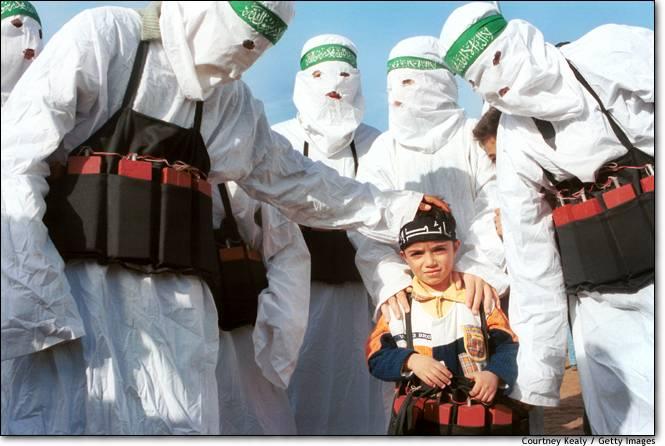 ups, such as Hamas. For some people, it is easier to declare that Hamas, for example, is politically motivated by Israel’s “occupation of Palestinian lands,” something seen as an injustice towards Palestinians, than to recognize the religious component of “the Palestinian struggle.” If the homicidal actions of Hamas are tied in with Israel’s so-called occupation of these sites, then the remedy is political and all that has to be done is for Israel to pull out of these areas and everything should become peaceful. This is relatively easy, at least in theory.
However, the resistance against the State of Israel is pre-existent to 1967, which is commonly mistaken today as being the catalyst for so-called Palestinian Nationalism. Arab resistance to Israel is even pre-existent to 1948, although at the very beginning of Zionism there were pro-Israel Arab voices, but were essentially short-lived. If we bring this image into focus, we can see a constant; resistance against Israel's existence is the norm. The Arab Riots of 1929 were also intended on seeing to it that Jewish immigration into Palestine would cease, it was a pre-Israel period form of intolerance for a Jewish state.
Let’s zoom out a little bit. Let’s look at Muslim history from a bird’s eye point of view and randomly choose a year in that time line. Now let’s say that in that randomly selected year that Jews, be they from Christian or from Muslim countries, wanted to establish a Jewish state. In the period after Islam had already anchored itself in the Middle East, what would have been the Muslim reaction to a Jewish state at any given point in time? Can we imagine that at any historical period of Islam that the Muslims of the Middle East would have supported the notion of a Jewish state? If we consider that the Muslim leaders, even the ones that were (relatively) respectful of the Jews, were in support of the concept known as dhimmitude, which was Jewish, Christian, and Sabian (another religious group) civil obedience to the Muslim state. Dhimmitude composed a social ladder in these Muslims countries, which by the way, is necessary for a functioning society, which only allowed limited movement for Jews (and Christians). Jews’ civil rights generally fluctuated from being treated decently to being treated like dogs, but the academic notion is that life was better for Jews there than under Christendom, which is generally true. Nevertheless, that is not the topic. The Muslim social order would not and could not have tolerated a Jewish state, which meant Jewish sovereignty and the negation of the status quo of dhimmitude, and hence a Jewish state becomes unacceptable in Muslim eyes. The very Muslim teachings that slavery, or ownership of one person over another, is not to be tolerated by the religion of Islam does not take into account that dhimmitude is indeed a form of this very slavery, and creates a classist situation.
So we are begging the question; why is there intolerance to a Jewish state? Is it the actions of the Jewish state that make it unacceptable, or is it the notion of its existence that plays out against the will of a contemporary manifestation of dhimmitude that makes Israel unacceptable? Another question that must be begged, if Islam's attitude towards Jews and Judaism is what makes Israel unacceptable, what motivation do non-Muslims have when applying the same criticisms? What we have is a situation where non-Muslims are responding to the anti-Israel Islam-based propaganda coming from the Muslim world and adopting it as their own argumentation. Another intersting thing to ponder is that Europe, with its own brand of Christianity-related anti-Semitism, as well responds to the particular Islam-based
 "arguments" and incorporates it. This is the basis of the contemporary European anti-Semitism discussion. What we get is a strange alliance between different forms of anti-Semitism. This is not too far-fetched, considering that during World War 2, Hitler flew to Jerusalem where he met with the Grand Mufti, Hajj Amin Al-Husseini, and coordinated spreading his campaign to North Africa and the Middle East. If the war had lasted another ten or so years, maybe less, it would be no surprise to have seen the Holocaust spread into the Muslim world. Perhaps then they would not have been able to deny it.
Palestinian Nationalism and Dhimmitude – What’s the Connection?
If dhimmitude is the status quo of Jews in so-called Muslim lands, and the dhimmi’s attainment of independence and sovereignty from the ruling Muslim body presents a threat to that social order, then the Muslim body will issue a defense mechanism. We can picture it like the human body, which contains many substances and organisms within it. Their presence in the body generally does not create a disturbance, but when they move into sectors where they are not supposed to be, or they began to act in ways that they previously did not, the balance is disturbed and the body takes the means necessary to return the body to order. Regardless of internal conflict of policy on the Jewish side of things, the State of Israel meant that Jews would have sovereignty in their land in the Middle East. The very religion of Islam claims that the Jews gave up their right to their holy land and to their covenant with G-d after committing a few cardinal sins, namely corrupting the Torah and worshipping the Golden Calf. So on top of dhimmitude, in Muslim eyes, the Jews have absolutely no right to establish a state in a land that they lost due to their idolatrous sins and rebellion against G-d, a claim that is made necessary by Islam’s desperate attempt to show that Islam has replaced Judaism.
There is a particularly disturbing and anti-Semitic notion out there that Zionism is the root cause of Muslim intolerance of Israel, and that Jews and Muslims were at peace under Muslim sovereignty. In other words, dhimmitude might have subjugated Jews under Muslims, but it was far better than life under Christendom, and dhimmitude was a naturally occuring system. Quoting Malka Hillel Shulewitz, author of "The Forgotten Millions," "Whether we are in Judea, Samaria or the Golan Heights is irrelevant except in so far as our presence makes us less vulnerable to Moslem attack and Islam's 'final solution' - a 'natural' return to dhimmitude."
Enter the Palestinians
There was no talk about Palestinian nationalism until 1967. The only constant coming from the Arab Muslim w
 orld before 1967 was the destruction of the State of Israel. So when all the previous attempts failed, the Arab world was in need of a new method that would bring them nearer to their goals of destroying Israel. It would have been easier for them to accept Israel into the neighborhood of the Middle East, but clearly they had not yet reached that level of cognition, and therefore wasted their resources. In the context of dhimmitude, if Jewish sovereignty is intolerable, then how much more intolerable is the emergence of a Muslim Arab population under Jewish rule? Not only does Islam consider Judaism a dilapidated religion, Arabs xenophobically claimed that the European Jews were not really Jews due to their European ethnicity. All in all, white Jews had sovereignty over Arab Muslims, who are the same people from which Muhammad descended, and this comes together to make quite an intolerable situation.
Let us look at a fatwa issued by Dr. Abdullah Yusuf Azzam, titled “Defense of the Muslim Lands; The First Obligation After Faith,” in which he stated,

"Jihad Against the Kuffar is of two Types: Offensive Jihad (where the enemy is attacked in his own territory) ... [and] Defensive Jihad. This is expelling the Kuffar from our land, and it is Fard Ayn [personal religious obligation on Muslim individuals], a compulsory duty upon all... Where the Kuffar [infidels] are not gathering to fight the Muslims, the fighting becomes Fard Kifaya [religious obligation on Muslim society]
 with the minimum requirement of appointing believers to guard borders, and the sending of an army at least once a year to terrorise the enemies of Allah. It is a duty of the Imam to assemble and send out an army unit into the land of war once or twice every year. Moreover, it is the responsibility of the Muslim population to assist him, and if he does not send an army he is in sin. - And the Ulama have mentioned that this type of jihad is for maintaining the payment of Jizya. The scholars of the principles of religion have also said: "Jihad is Daw'ah with a force, and is obligatory to perform with all available capabilities, until there remains only Muslims or people who submit to Islam."
* Note: The word "Islam" means submission, and is generally rendered "submission to G-d." However, Dr. Azzam specifically mentions Islam in the context of submission to Islam and not submission to G-d. This reinforces that Islam is not concerned with peoples' universal acceptance of G-d's sovereignty, but of the universal acceptance of Islam's sovereignty over people.
A clever eye could quickly assert that this quote is possibly representative only of certain periods of time and does not apply to Islam when it is in normative relationships with its neighbors. There might be truth to that, but the point is that the quote unhesitatingly correlates religious duty with ownership of land, including the requirement to “terrorise the enemies of All-h,” that is, the inhabitants of the land. Islam’s relationship with land is that its goal is to conquer areas that are estranged to Islam, or areas in which non-Muslims live. Contrast this to Judaism’s view of land ownership, for example, which is limited to the Land of Israel as stated in the Torah. Since G-d promises the Land of Israel to the Jews, and the religion of Islam believes that all lands must accept Islam, the land of Israel is an area contested between Judaism and Islam. Clearly, since Islam believes that all lands are to be under Muslim sovereignty, the Land of Israel’s location in the Middle East is irrelevant to Islam’s claim; the sphere of “Muslim control” will always intersect with the Land holy to Jews. In short, Muslim land claims are drawn to the Land of Israel, wherever it may be. In reality, it is no wonder that Islam emerged in the Middle East, in the physical vicinity of the Land of Israel, and not somewhere far removed.
Consider also this verse from Dr. Azzam:
... the Ulama [pious scholars] of the four Mathhabs (Maliki, Hanafi, Shaffie and Hanbali), the Muhadditheen, and the Tafseer commentators [classical Muslim commentators of the Qur'an], are agreed that in all Islamic ages, Jihad under this condition becomes Fard Ayn [personal religious obligation] upon the Muslims of the land which the Kuffar [infidels] have attacked and upon the Muslims close by, where the children will march forth without the permission of the parents, the wife without the permission of her husband and the debtor without the permission of the creditor. And, if the Muslims of this land cannot expel the Kuffar because of lack of forces, because they slacken, are indolent or simply do not act, then the Fard Ayn obligation spreads in the shape of a circle from the nearest to the next nearest. If they too slacken or there is again a shortage of manpower, then it is upon the people behind them, and on the people behind them, to march forward. This process continues until it becomes Fard Ayn [a personal religious obligation] upon the whole world.

It is important to note that much can be said about this topic; there are many Muslims that disagree with these concepts, or at least the interpretations. However, it is important to understand that when it comes to the Palestinian attacks on Israeli’s, not only is there a correlation between the (baseless) political claims to the (Land) State of Israel made by Palestinians (and other Arabs), the claims are made in accordance with the attitude laid down by varying Muslim traditions, in this case, the unilateral agreement by the four major schools of Islamic thought and their commentators. Consider that when the Palestinian media broadcasts Muslim sermons, the nature of the message, almost always quoting from the Q’uran itself or commentaries (Hadith) attacks Jews as a religious community and people as a whole. The very driving force of Palestinian nationalism is not just the establishment of a Palestinian state, but the establishment of a Palestinian state in place of Israel, which is consistent with the goals of the religion of Islam as expressed by Dr. Azzam in his commentary on Fard Ayn. The goal is not to have a state next to another state, but it is to drive the infidels from the land, giving the child, wife, and debtor free reign in the name of destroying them. Is this really the Palestinians talking, or is it the nearly fourteen centuries of the Muslim domination of the Middle East, and specifically Jewish lands, that has become the status quo?
The Difference between Christendom and Islam
It can be said that the post-destruction of the Second Temple takeover of the Middle East had two general chapters; chapter one, Christianity, chapter two, Islam. Chapter one, from the year 70 until about 622 CE, and when Islam became the leading element opened the second chapter. Chapter two went from roughly that time period until the Enlightenment of Christendom in the early 19th century. One view of history has dumped both periods into one as simply “post Second Temple,” but it becomes easier to understand if we view chapter one and chapter two separately.
Thursday, July 14, 2005
Subduing Evil
In Jewish terms, G-d’s purpose for making humanity was to make this world aware of His presence and therefore to make this world a better place. The Torah was given with this in mind; it is a blueprint for life, for human existence, and for humane existence. The Torah introduced humanity to a notion of fixed right and wrong, notions that were only meaningful if they took both means and ends into account. In this view, it is impossible to reach a higher end by violating the means, or in other words, it is unacceptable to perform a bad deed with the intent in mind to perform a greater deed. The classic example is that it is forbidden to cause one person to die in order to save two, or ten, or twenty other people, for the life of a human being is immeasurable in value.
But how do we go about making the world a better place? The Torah takes into account both the internal and external factors that are needed to be recognized in this task. The Torah is made up of both commandments that are focused on the internal self of the human and his relationship with G-d and with the human self, the interaction between individual and individual, individual and group, and group and group. Ultimately, the relationship is also between the group and G-d and humanity and G-d. The point of these commandments is to learn how to subdue the evil that exists in this world and the evil that exists within us.
If one were to look at the nature of evil, it would be clear to see that it is both an internal and external force. Indeed, evil must have a point of origin, so the question is, is the originating point of evil internal or external, is it in humanity or is it in the world? It must come from somewhere. The world is not a living thing, so it would be irrational to say that evil comes from the world, that somehow nature emits evil, creating the world that we live in. The other possibility is that evil comes from within humanity, and to some degree, from individuals, and therefore can be replaced by the good that comes from us. Evil is defined by Judaism as the choice to, or the loss of control that leads a person to lose self-control, do something wrong. Every human being possesses an animalistic side that is untamed and wild, and giving way to that side of humanity causes a person to act in error, be it violence, unbridled lust, or even depression. The point is that all of these things are connected to a loss of control, a person doesn’t choose to be violent, lustful, or depressed, and usually they don’t want to, and a little bit of effort can bring these things into the realm of control.
However, Judaism also says that these forces, these forms of energy, serve certain purposes if they are carried out in mindful and pure manners. For example, when one is defending oneself, the emotion that leads to violence, rage, can be beneficial. In the context of marriage between a loving husband and wife, lust is not bad. Depression, or sadness, might be a result of something tragic that happened, therefore indicating that the depressed person understands the reality of the tragedy. Eventually however, it must pass. Unless we can say that nature is evil or ill-willed, for example, hurricanes or volcanoes that kill people, we have to conclude that the source of evil is internal. For example, when a person drowns, he dies, we don’t say that the water murdered him, but when a person drowns another person, he has murdered him. It is the presence of will that makes murder murder, and it is will that can prevent murder. There is no use in getting mad at the forces of nature or thanking them; they have no power of choice. Evil therefore, is internal, and so is good.
However, both evil and good can be externalized, and rarely do they last as internal forces for long periods of time. It seems that we have a direct relationship with the world around us; what we put in is what goes out, and what goes out is then what we are surrounded by and therefore what goes in, and so on. But it must start somewhere, and that point is us, the human being. When we consider that the world already seems to be functioning in a semi-automatic fashion, we exclude the notion that whatever manner in which it is functioning is due to the human beings that have made up that society. Society on its own is not an independent force, it does not just exist. Therefore, humanity has created society.
However, many times society actually becomes a semi-independent force; rather than we choosing and maintaining society in the way we want, we take the back seat and let it influence us. In these cases, we speak about society as having a “mind.” This reality says something about human nature, it is easier and more natural to be formed, or to conform, to an already-existing set of norms, and it has little or nothing to do with the actual nature of those norms or their implications. Society functions like a vacuum, it is an empty space, and all empty spaces must be filled with something, and those somethings are norms, which become laws. Very few people take much time to think about the norms that they follow day-in and day-out; they go along with them because they allow them to function in society. There is nothing wrong with this, many norms exist as purely functional norms, and they allow people to understand each other as when speaking the same language. But some norms have deeper implications than simple communication.
For example, taking something that does not belong to you is act of violation; it has nothing to do with maintaining society’s internal order, but rather, violates that standard of internal order. A more subtle example is the conceptual interchange that occurs when two people are talking to each other. In human interactions, it is important to give another person the benefit of the doubt; it is a tool that can be used to keep societies in working order. Furthermore, it is the very will of G-d that humans interact peacefully, which is not always the easiest thing. But interacting peacefully with another person is not an external behavior because a person that does not understand the internal mechanisms of getting along with another person will not be able to achieve it. Therefore, the commandment to give another person the benefit of the doubt is both an internal and external exercise; internally, it leads to self-improvement, externally, it leads to fairness. Ultimately, both are pleasing to G-d. When we live in a society with many vacuums that can be filled with many types of ideas and thinking, it is extraordinarily important to have a set of values that reflect higher thinking. In Judaism, this set of values is called the Torah.
In Jewish terms, G-d’s purpose for making humanity was to make this world aware of His presence and therefore to make this world a better place. The Torah was given with this in mind; it is a blueprint for life, for human existence, and for humane existence. The Torah introduced humanity to a notion of fixed right and wrong, notions that were only meaningful if they took both means and ends into account. In this view, it is impossible to reach a higher end by violating the means, or in other words, it is unacceptable to perform a bad deed with the intent in mind to perform a greater deed. The classic example is that it is forbidden to cause one person to die in order to save two, or ten, or twenty other people, for the life of a human being is immeasurable in value.
But how do we go about making the world a better place? The Torah takes into account both the internal and external factors that are needed to be recognized in this task. The Torah is made up of both commandments that are focused on the internal self of the human and his relationship with G-d and with the human self, the interaction between individual and individual, individual and group, and group and group. Ultimately, the relationship is also between the group and G-d and humanity and G-d. The point of these commandments is to learn how to subdue the evil that exists in this world and the evil that exists within us.
If one were to look at the nature of evil, it would be clear to see that it is both an internal and external force. Indeed, evil must have a point of origin, so the question is, is the originating point of evil internal or external, is it in humanity or is it in the world? It must come from somewhere. The world is not a living thing, so it would be irrational to say that evil comes from the world, that somehow nature emits evil, creating the world that we live in. The other possibility is that evil comes from within humanity, and to some degree, from individuals, and therefore can be replaced by the good that comes from us. Evil is defined by Judaism as the choice to, or the loss of control that leads a person to lose self-control, do something wrong. Every human being possesses an animalistic side that is untamed and wild, and giving way to that side of humanity causes a person to act in error, be it violence, unbridled lust, or even depression. The point is that all of these things are connected to a loss of control, a person doesn’t choose to be violent, lustful, or depressed, and usually they don’t want to, and a little bit of effort can bring these things into the realm of control.
However, Judaism also says that these forces, these forms of energy, serve certain purposes if they are carried out in mindful and pure manners. For example, when one is defending oneself, the emotion that leads to violence, rage, can be beneficial. In the context of marriage between a loving husband and wife, lust is not bad. Depression, or sadness, might be a result of something tragic that happened, therefore indicating that the depressed person understands the reality of the tragedy. Eventually however, it must pass. Unless we can say that nature is evil or ill-willed, for example, hurricanes or volcanoes that kill people, we have to conclude that the source of evil is internal. For example, when a person drowns, he dies, we don’t say that the water murdered him, but when a person drowns another person, he has murdered him. It is the presence of will that makes murder murder, and it is will that can prevent murder. There is no use in getting mad at the forces of nature or thanking them; they have no power of choice. Evil therefore, is internal, and so is good.
However, both evil and good can be externalized, and rarely do they last as internal forces for long periods of time. It seems that we have a direct relationship with the world around us; what we put in is what goes out, and what goes out is then what we are surrounded by and therefore what goes in, and so on. But it must start somewhere, and that point is us, the human being. When we consider that the world already seems to be functioning in a semi-automatic fashion, we exclude the notion that whatever manner in which it is functioning is due to the human beings that have made up that society. Society on its own is not an independent force, it does not just exist. Therefore, humanity has created society.
However, many times society actually becomes a semi-independent force; rather than we choosing and maintaining society in the way we want, we take the back seat and let it influence us. In these cases, we speak about society as having a “mind.” This reality says something about human nature, it is easier and more natural to be formed, or to conform, to an already-existing set of norms, and it has little or nothing to do with the actual nature of those norms or their implications. Society functions like a vacuum, it is an empty space, and all empty spaces must be filled with something, and those somethings are norms, which become laws. Very few people take much time to think about the norms that they follow day-in and day-out; they go along with them because they allow them to function in society. There is nothing wrong with this, many norms exist as purely functional norms, and they allow people to understand each other as when speaking the same language. But some norms have deeper implications than simple communication.
For example, taking something that does not belong to you is act of violation; it has nothing to do with maintaining society’s internal order, but rather, violates that standard of internal order. A more subtle example is the conceptual interchange that occurs when two people are talking to each other. In human interactions, it is important to give another person the benefit of the doubt; it is a tool that can be used to keep societies in working order. Furthermore, it is the very will of G-d that humans interact peacefully, which is not always the easiest thing. But interacting peacefully with another person is not an external behavior because a person that does not understand the internal mechanisms of getting along with another person will not be able to achieve it. Therefore, the commandment to give another person the benefit of the doubt is both an internal and external exercise; internally, it leads to self-improvement, externally, it leads to fairness. Ultimately, both are pleasing to G-d. When we live in a society with many vacuums that can be filled with many types of ideas and thinking, it is extraordinarily important to have a set of values that reflect higher thinking. In Judaism, this set of values is called the Torah.
Wednesday, July 13, 2005
London's Passive Assistance
London mourns the victims, passengers whose lives wer etaken by fellow countrymen, fellow Brits. I had a feeling that certain British news stations (BBC) would find ways in explaining away the terrorist attacks in London, and unfortunately I was right. I mean, come on, since when does a person’s religious affiliation have anything to do with his ideas or behaviors, even when that religion is Islam and the world is seeing Islam’s dark undercurrent in a generation that allows it to meet with this century’s technology? British people, perhaps wounded by a distant memory of imperialism, affected by the outcome of their just decision to support the creation of the State of Israel, and years of torment from the IRA, has left British people squeamish to blood shed. We also should not forget British Christianity’s Renaissance Era Jew-resentment, which was akin to all European Christendom. Now that many British can claim that Christianity has been moved aside for the secular so-called humanism, they seek to break bonds with the anti-Semitism of those bygone days.
In fact, Britain boasts its extant pluralism, its openness to all cultures, lifestyles, and religions, focusing society on embracing the beauty that all have to offer, even if they believe that G-d doesn’t exist. Consider the “Islam Kit” just approved by the British government to use as a curriculum tool in British schools. The Islam Kit was designed to teach British students about the ins and outs of the Muslim religion so that they would feel at home with their British Muslim compatriots. This would lower the possibility of unnecessary hatred between British people, regardless of religion, unlike those racist and xenophobic Americans that stoop to racial profiling. The four Muslims that rode to their deaths on the subways of the perhaps religiously-titled “King’s Cross” subway station could not hear the British accents of the victims over the bombs that exploded.
But Britain is proud of its minority populations, the Hindu’s for example, their “jewel in the crown,” who speak British English with just a touch of their Indian accent. In a show of Britain’s multiculturalism, mainstream movie pop culture joyfully portrays the lifestyle of British Hindu’s and how well they get along with the Anglo-Saxon population, imitating the folk-style of Hindu song-and-dance, now known as “Baliwood.” They are a relic to be treasured, a testament to cultural openmindedness. Perhaps the British Muslim population was on its way to entering into that beautiful era of cooperation, if it wasn’t for the four homicide bombings that occurred just a few days ago. Nevertheless, I believe that the British news stations will find the resolve and resiliency to explain to the world the real reason behind the phenomena of the exploding Muslims in the subway station; Israel’s continuing oppression of the Palestinian people, America’s support of Israel, and its aggression in Iraq.
London mourns the victims, passengers whose lives wer etaken by fellow countrymen, fellow Brits. I had a feeling that certain British news stations (BBC) would find ways in explaining away the terrorist attacks in London, and unfortunately I was right. I mean, come on, since when does a person’s religious affiliation have anything to do with his ideas or behaviors, even when that religion is Islam and the world is seeing Islam’s dark undercurrent in a generation that allows it to meet with this century’s technology? British people, perhaps wounded by a distant memory of imperialism, affected by the outcome of their just decision to support the creation of the State of Israel, and years of torment from the IRA, has left British people squeamish to blood shed. We also should not forget British Christianity’s Renaissance Era Jew-resentment, which was akin to all European Christendom. Now that many British can claim that Christianity has been moved aside for the secular so-called humanism, they seek to break bonds with the anti-Semitism of those bygone days.
In fact, Britain boasts its extant pluralism, its openness to all cultures, lifestyles, and religions, focusing society on embracing the beauty that all have to offer, even if they believe that G-d doesn’t exist. Consider the “Islam Kit” just approved by the British government to use as a curriculum tool in British schools. The Islam Kit was designed to teach British students about the ins and outs of the Muslim religion so that they would feel at home with their British Muslim compatriots. This would lower the possibility of unnecessary hatred between British people, regardless of religion, unlike those racist and xenophobic Americans that stoop to racial profiling. The four Muslims that rode to their deaths on the subways of the perhaps religiously-titled “King’s Cross” subway station could not hear the British accents of the victims over the bombs that exploded.
But Britain is proud of its minority populations, the Hindu’s for example, their “jewel in the crown,” who speak British English with just a touch of their Indian accent. In a show of Britain’s multiculturalism, mainstream movie pop culture joyfully portrays the lifestyle of British Hindu’s and how well they get along with the Anglo-Saxon population, imitating the folk-style of Hindu song-and-dance, now known as “Baliwood.” They are a relic to be treasured, a testament to cultural openmindedness. Perhaps the British Muslim population was on its way to entering into that beautiful era of cooperation, if it wasn’t for the four homicide bombings that occurred just a few days ago. Nevertheless, I believe that the British news stations will find the resolve and resiliency to explain to the world the real reason behind the phenomena of the exploding Muslims in the subway station; Israel’s continuing oppression of the Palestinian people, America’s support of Israel, and its aggression in Iraq.
Thursday, July 07, 2005
Judeo –Christian?
The term Judeo-Christian is commonly used to describe the nature of America’s religious system. The Merriam-Webster’s Online Dictionary defines the term Judeo-Christian:
having historical roots in both Judaism and Christianity
In that sense, America is a Judeo-Christian country, with the founders of the Constitution drawing inspiration from Christianity, and Christianity being a religion that, aside from its viewpoints concerning the Trinity, is composed largely of parallel values to those found in Judaism. Furthermore, America’s legal system has taken traits from Rome’s and the Talmud’s judicial process, such witnesses and lex talionis (an eye for an eye), as well as the death penalty, for example. Therefore, America’s system is a hodge-podge of Jewish, Christian, and Roman influence, and secular democracy (separation of Church and State) all mixed into one.
A slightly variant definition of term from Dictionary.com defines “Judeo-Christian” as, “being historically related to both Judaism and Christianity; "the Judeo-Christian tradition." The term “Judeo-Christian tradition” signifies that the Jewish and Christian traditions are similar enough to be classified together in a hyphenated term, but this is not exactly the case; both Jewish and Christian traditions, and their theologies, are quite different from each other. To start, they do share common similarities, such as the belief in the One G-d, life after death, messiah, and the difference between good and evil, but suffice it to say that the fulcrum of Jewish theology (Torah) and the fulcrum of Christian theology (Jesus), alter the entire theological scope of each respective religion. In this light, the term “Judeo-Christian tradition” does a fairly poor job of actually delineating the Jewish and Christian traditions. While their traditions consist of some of the same liturgy and terminology, the definitions and concepts surrounding these similarities are vastly different.
Take, for example, the Jewish and Christian conceptualizations of sin. In Judaism, the Torah is the Divine blueprint for life with its Author and Fulcrum being G-d, and therefore, sin, or transgression, is the name for when a person violates a part of the Torah. This means that according to Judaism, each individual carries the ability to stay away from sin. Christianity’s notion of sin is derived from the Creation account of Genesis. When Adam and Eve ate of the fruit of the Tree of Knowledge, they and their ancestors (humanity) entered into a perpetual state of sin, which keeps them from nearing G-d, necessitating the death of Jesus to free them from that impassible obstruction. Judaism’s “interpretation” of the Creation account of Genesis makes for an entirely different understand and theology – a difference as subtle as an interpretation is the cause of the very different theologies possessed by Judaism and Christianity. The differences are far-reaching and the term “Judeo-Christian” becomes an inaccurate one.
America is a Judeo-Christian country, which for all practical purposes, would be the same as saying that it is a Christian country. Whether America is or is not a Christian country is a whole other topic and I’ll probably write something about it sometime in the future. For the sake of the argument, Judeo-Christian means Christian, and this is why; Christianity is a religion, as mentioned earlier, that apart from its belief in the Trinity, has many behavioral parallels to Judaism. Since Christianity has its own interpretation of Jewish theological concepts and in its own mind is the completion of Judaism, to say “Judeo-Christian” is really to say “Christian.” For example, a person of the Christian faith would find this analogy agreeable; blue is to purple as Judaism is to Christianity. Blue plus red makes purple, and Judaism plus Jesus makes Christianity. A person of the Jewish persuasion would find this analogy agreeable; circle is to triangle as Judaism is to Christianity, the two are both shapes, but are otherwise unrelated.
An example of a Judeo country, or a Jewish country, would be Israel. In reality, all Christian countries can be titled Judeo-Christian countries, because Christianity itself is a Judeo-Christian religion. The same logic can be applied to the term “Messianic Judaism,” a redundant term given to the fact that Judaism is a Messianic religion, a religion that believes in the Coming of the Messiah (and that he is not Jesus). The Christian movement known as Messianic Judaism came up with that name with the intent to express its belief that Judaism is incomplete without a Messiah, and that he has already come. Therefore, the concept of “Messianic Judaism” repeats the ethos of the Christian religion in that Christianity is the completed form of Judaism, hence Messianic Judaism is really a “backwards reaching” form of Christianity.
Judeo-Christo-Islamic?
For the same reason that we can say that Christianity is a Judeo-Christian religion, we can say that Islam is a Judeo-Christo-Islamic religion, a debate that will probably spread through America’s academic and intellectual circles very soon, if it already hasn’t started. A possible alternative to the meaning of the word “Judeo-Christian” is that America is a Christian country that has allowed much for the influence of Jews. Since Christianity was not a religion influenced by Islam, but vice-versa, America will only be considered to be a Judeo-Christo-Islamic country in the event that Muslims increasingly become a part of mainstream America.
In reality, as mentioned earlier, America is a country that allows for the free speech and influence of all groups, but is a country based in the separation of Church and State, a term which itself is semi-explanatory of Christianity's role in this country. For example, my personal experience from speaking to people from the majority populace of America, people who are not particularly religious but come from a Christian background, speaking about G-d makes them think of the Trinity or of Jesus, which in a Jewish mind are completely unrelated concepts. Seeing that America's Jewish population is 2-4% of the majority population, Jewish theology is an undercurrent in America, except for those who are educated in religion or theology.
The term Judeo-Christian is commonly used to describe the nature of America’s religious system. The Merriam-Webster’s Online Dictionary defines the term Judeo-Christian:
having historical roots in both Judaism and Christianity
In that sense, America is a Judeo-Christian country, with the founders of the Constitution drawing inspiration from Christianity, and Christianity being a religion that, aside from its viewpoints concerning the Trinity, is composed largely of parallel values to those found in Judaism. Furthermore, America’s legal system has taken traits from Rome’s and the Talmud’s judicial process, such witnesses and lex talionis (an eye for an eye), as well as the death penalty, for example. Therefore, America’s system is a hodge-podge of Jewish, Christian, and Roman influence, and secular democracy (separation of Church and State) all mixed into one.
A slightly variant definition of term from Dictionary.com defines “Judeo-Christian” as, “being historically related to both Judaism and Christianity; "the Judeo-Christian tradition." The term “Judeo-Christian tradition” signifies that the Jewish and Christian traditions are similar enough to be classified together in a hyphenated term, but this is not exactly the case; both Jewish and Christian traditions, and their theologies, are quite different from each other. To start, they do share common similarities, such as the belief in the One G-d, life after death, messiah, and the difference between good and evil, but suffice it to say that the fulcrum of Jewish theology (Torah) and the fulcrum of Christian theology (Jesus), alter the entire theological scope of each respective religion. In this light, the term “Judeo-Christian tradition” does a fairly poor job of actually delineating the Jewish and Christian traditions. While their traditions consist of some of the same liturgy and terminology, the definitions and concepts surrounding these similarities are vastly different.
Take, for example, the Jewish and Christian conceptualizations of sin. In Judaism, the Torah is the Divine blueprint for life with its Author and Fulcrum being G-d, and therefore, sin, or transgression, is the name for when a person violates a part of the Torah. This means that according to Judaism, each individual carries the ability to stay away from sin. Christianity’s notion of sin is derived from the Creation account of Genesis. When Adam and Eve ate of the fruit of the Tree of Knowledge, they and their ancestors (humanity) entered into a perpetual state of sin, which keeps them from nearing G-d, necessitating the death of Jesus to free them from that impassible obstruction. Judaism’s “interpretation” of the Creation account of Genesis makes for an entirely different understand and theology – a difference as subtle as an interpretation is the cause of the very different theologies possessed by Judaism and Christianity. The differences are far-reaching and the term “Judeo-Christian” becomes an inaccurate one.
America is a Judeo-Christian country, which for all practical purposes, would be the same as saying that it is a Christian country. Whether America is or is not a Christian country is a whole other topic and I’ll probably write something about it sometime in the future. For the sake of the argument, Judeo-Christian means Christian, and this is why; Christianity is a religion, as mentioned earlier, that apart from its belief in the Trinity, has many behavioral parallels to Judaism. Since Christianity has its own interpretation of Jewish theological concepts and in its own mind is the completion of Judaism, to say “Judeo-Christian” is really to say “Christian.” For example, a person of the Christian faith would find this analogy agreeable; blue is to purple as Judaism is to Christianity. Blue plus red makes purple, and Judaism plus Jesus makes Christianity. A person of the Jewish persuasion would find this analogy agreeable; circle is to triangle as Judaism is to Christianity, the two are both shapes, but are otherwise unrelated.
An example of a Judeo country, or a Jewish country, would be Israel. In reality, all Christian countries can be titled Judeo-Christian countries, because Christianity itself is a Judeo-Christian religion. The same logic can be applied to the term “Messianic Judaism,” a redundant term given to the fact that Judaism is a Messianic religion, a religion that believes in the Coming of the Messiah (and that he is not Jesus). The Christian movement known as Messianic Judaism came up with that name with the intent to express its belief that Judaism is incomplete without a Messiah, and that he has already come. Therefore, the concept of “Messianic Judaism” repeats the ethos of the Christian religion in that Christianity is the completed form of Judaism, hence Messianic Judaism is really a “backwards reaching” form of Christianity.
Judeo-Christo-Islamic?
For the same reason that we can say that Christianity is a Judeo-Christian religion, we can say that Islam is a Judeo-Christo-Islamic religion, a debate that will probably spread through America’s academic and intellectual circles very soon, if it already hasn’t started. A possible alternative to the meaning of the word “Judeo-Christian” is that America is a Christian country that has allowed much for the influence of Jews. Since Christianity was not a religion influenced by Islam, but vice-versa, America will only be considered to be a Judeo-Christo-Islamic country in the event that Muslims increasingly become a part of mainstream America.
In reality, as mentioned earlier, America is a country that allows for the free speech and influence of all groups, but is a country based in the separation of Church and State, a term which itself is semi-explanatory of Christianity's role in this country. For example, my personal experience from speaking to people from the majority populace of America, people who are not particularly religious but come from a Christian background, speaking about G-d makes them think of the Trinity or of Jesus, which in a Jewish mind are completely unrelated concepts. Seeing that America's Jewish population is 2-4% of the majority population, Jewish theology is an undercurrent in America, except for those who are educated in religion or theology.
Wednesday, July 06, 2005
The Musical Diet
Let’s be clear about music, its purpose is to infiltrate the human conscious, to take one to another place, and ultimately, to express the most inner longings of the soul. This is what people strive for when they listen to music, and it’s what they strive for when they make it. We can liken music to a drink or perhaps to something in the air; listening to music is like drinking a beverage from a glass or taking a breath, putting the substance inside of you and subsequently making it a part of you. Similar to the way a beverage or something in the air has an effect on the body, music has an effect on the listener’s soul, which is essentially the reason we listen to music in the first place.
Before choosing a beverage from the shelf of a store, most people look at the nutrition facts to make sure if it is something that they really should be putting in their bodies (it would benefit me to adopt this practice). The amount of sugar, calories, fat, etc, become factors in choosing the drink. Now if the body is important to the human experience, imagine just how much more important the soul is to the human experience, and if one is going to choose wh at substances to put in the body, one should also be choosy on what materials to put into the soul – music in this case.
We can’t deny the effect of music on the soul, especially considering that musicians and lyricists usually compose music during moments of inspiration, be they happy, sad, extremely angry, etc… Consequently, whatever they put out is what goes in (to the listener); whatever emotions or messages the singer is externalizing, the listener will internalize. Would you eat something if you didn’t know what was in it? The truth is that if the listener is not internalizing the emotions and message of the music, then he or she is not really experiencing the music properly; its design is to move, and as long as the point is to internalize it, it is healthy to internalize healthy music.
The way I see it, many things help define what makes music healthy. The message is definitely important, but sometimes the very sounds made or the way the singer sings are just as influential. Instruments are an extension of the human voice, which is a vessel for the soul to externalize its innards; therefore instruments are also used to express the soul. Since most sounds are universally understood, even across cultural boundaries, certain sounds affect listeners in certain ways; drums universally make people want to dance, for example. If the voice or instrumentation is angry, chances are the listener will be affected in a similar way, and usually the lyrics are just as angry as the music, and the same is true when the music is happy. A voice is a type of instrument in itself, even if the language is not understood, the tone of the music can be understood quite easily; this is a testament to the universality of music.
The Process of Music
The message, the voice, and the music all leave a residue on the listener, and have a very effective way of altering moods and ultimately affecting the status of the soul. If th ese components (message, voice, music) combine to make something good, or healthy, or pure, or clean, then the effect they have on the person will be equally as good and the person will have a positive reaction to the music. If day-by-day one has a healthy diet of music (or any influencing factors for that matters), then rest assured that the soul will reflect what it consumes and will create for a general feeling of well-being. It's not just music that affects a person in this way, but everything else that she or he chooses to be surrounded by or to internalize.
The Opposite is Also True

*Note: the effect of spiritually and mentally unhealthy music. No joke, I have seen this happen to people!
Let’s be clear about music, its purpose is to infiltrate the human conscious, to take one to another place, and ultimately, to express the most inner longings of the soul. This is what people strive for when they listen to music, and it’s what they strive for when they make it. We can liken music to a drink or perhaps to something in the air; listening to music is like drinking a beverage from a glass or taking a breath, putting the substance inside of you and subsequently making it a part of you. Similar to the way a beverage or something in the air has an effect on the body, music has an effect on the listener’s soul, which is essentially the reason we listen to music in the first place.
Before choosing a beverage from the shelf of a store, most people look at the nutrition facts to make sure if it is something that they really should be putting in their bodies (it would benefit me to adopt this practice). The amount of sugar, calories, fat, etc, become factors in choosing the drink. Now if the body is important to the human experience, imagine just how much more important the soul is to the human experience, and if one is going to choose wh
 at substances to put in the body, one should also be choosy on what materials to put into the soul – music in this case.
We can’t deny the effect of music on the soul, especially considering that musicians and lyricists usually compose music during moments of inspiration, be they happy, sad, extremely angry, etc… Consequently, whatever they put out is what goes in (to the listener); whatever emotions or messages the singer is externalizing, the listener will internalize. Would you eat something if you didn’t know what was in it? The truth is that if the listener is not internalizing the emotions and message of the music, then he or she is not really experiencing the music properly; its design is to move, and as long as the point is to internalize it, it is healthy to internalize healthy music.
The way I see it, many things help define what makes music healthy. The message is definitely important, but sometimes the very sounds made or the way the singer sings are just as influential. Instruments are an extension of the human voice, which is a vessel for the soul to externalize its innards; therefore instruments are also used to express the soul. Since most sounds are universally understood, even across cultural boundaries, certain sounds affect listeners in certain ways; drums universally make people want to dance, for example. If the voice or instrumentation is angry, chances are the listener will be affected in a similar way, and usually the lyrics are just as angry as the music, and the same is true when the music is happy. A voice is a type of instrument in itself, even if the language is not understood, the tone of the music can be understood quite easily; this is a testament to the universality of music.
The Process of Music
The message, the voice, and the music all leave a residue on the listener, and have a very effective way of altering moods and ultimately affecting the status of the soul. If th
 ese components (message, voice, music) combine to make something good, or healthy, or pure, or clean, then the effect they have on the person will be equally as good and the person will have a positive reaction to the music. If day-by-day one has a healthy diet of music (or any influencing factors for that matters), then rest assured that the soul will reflect what it consumes and will create for a general feeling of well-being. It's not just music that affects a person in this way, but everything else that she or he chooses to be surrounded by or to internalize.
The Opposite is Also True
*Note: the effect of spiritually and mentally unhealthy music. No joke, I have seen this happen to people!
The Universe Stripped of its Ethics
Ethics and moral relativism, or more poignantly put, moral absolutism and moral relativism are competing with each other for a spot in civilization’s top one hundred. Before we go on, let us attempt to define each of these things. In a nutshell, moral absolutism is grounded on the notion that there is an identifiable right and wrong in this world of ours, and that some things are absolutely wrong and some are absolutely right. However, the phrase “absolutely anything” suggests itself to extremism because of the way it is used in speech; consider hearing somebody say, “That is absolutely incorrect,” has a tinge of extremism to it doesn’t it? The definition of the word “absolute,” however, yields a different connotation. The applicable Marriem-Webster’s definitions for “absolute” are:
1b : free or relatively free from mixture : PURE
6a : independent of arbitrary standards of measurement
It is absolutely true that “absolute” has many definitions, but for the sake of this point, I’ll choose the two that do the job; and they are 1b and 6a. The word "absolute" signifies degree, if something has an absolute definition, the degree of whatever is being discussed is carried out to its fullest. For example, absolute darkness means a type of darkness in which there is no light, and absolute light would mean the opposite. In some cases, “absolute” has tyrannical connotations, as in the cases of governments for example, but the word also has a neutral meaning, in the case, for example, that murdering a person is wrong in an absolute sense, or in other words, absolutely wrong. Consider society’s positive use of the word “absolution,” equitable with closure, as when a person dies the relatives seek absolution, contrasted to society’s use of the word “absolutist,” such as an absolutist government, in which decisions are made without any leeway. What if we were to say that the strict government wanted absolution and that the people who wanted closure were absolutists?
“Relativism” is defined as:
1 a : a theory that knowledge is relative to the limited nature of the mind and the conditions of knowing
b : a view that ethical truths depend on the individuals and groups holding them
If and when absolute value is applied absolutely, not taking unpredictable circumstances into account, then it becomes a suffocating force – a measure of degree is necessary. Likewise, when relativism is carried to the absolute degree, the measuring stick of society becomes inoperable and right and wrong become figments of the imagination. Absolute relativism becomes a dangerous scenario, threatening societal disintegration, while absolute absolutism threatens society with a high pressure situation that tends to lead to retaliation or silence. So it’s not that the words “absolutism” or “relativism” are bad, a degree of each is necessary, it’s when each of the concepts is carried to an absolute degree that each become horribly damaging. To contrast, the phrase “relative absolutism” is used to compare one society to another and to say that, compared to their society, we live in absolutism, meaning that their society is freer than ours. “Relative relativism” is used in the same way; if we live in relative relativism to another society, then compared to them, we are more relativist and they are more absolutist.
So after all this mindless chatter, how can we define “moral absolutism” and “moral relativism?” Moral absolutism would have to connote a system that focuses, or at least recognizes, the absolute value of morals, meaning that it does not “fudge” the definition of, for example, murder, which is always wrong, always immoral. However, it is up to that society to establish the definition of the word “murder,” and it would find that specific meaning in a definition that leans strongly towards applying a consistent definition in any circumstance. It goes to say that over time and due to particular circumstances, the very word can go through a conceptual development, but generally stays within the bounds of the absolute intent of the purpose of defining it in the first place, which is to prevent people from murdering.
Moral relativism is a system in which definitions of morality are considered to be alterable according to the preferences, not needs, of the society. As we see, in the system of moral absolutism, the definition of a term can change to fit the needs of the society, but does not pass over the boundaries of the initial intent of the word, commonly referred to as “the spirit of the law.” Since a system of moral relativism tends to want to reject the notion that a mere law can carry with it a spirit, such a system desires only to have spirit and no law. It is not anchored by a definition of murder, to stay with the example, and therefore there is no proper or conceptual model by which to define what murder actually is. In societies that possess such a trend, murder is open-ended; anything can be considered murder, but usually either everything is considered murder or nothing is. Sometimes, the definition of murder becomes inconsistent, being applied to one degree in a particular situation and to another in a different situation, with no attempt to tie one scenario to another. Every once in a while, a relativist system actually produces a form of absolutism, where either everything is allowable or nothing is allowable. We can take “political correctness” for example; sometimes to be politically correct means to be completely silent about a matter, and to break the silence means to be intolerant, while on the other hand, it is deemed perfectly acceptable and even encouraged to express every opinion on a different matter in an unbridled fashion. Most of the time, however, such a trend produces confusion that leaves words and concepts undefined, or defined only in ways that are practical and convenient, and usually differ from individual to individual.
So how does this have to do with the universe? Quite a bit actually; as our knowledge of the world and universe grows, along with our desire to know, we begin to perceive that we are changing in two ways simultaneously. On one hand, we are growing exponentially in accordance with our growing abilities, and on the other hand, we are shrinking quickly because our abilities allow us to contact each other with amazing speed and accuracy, making the world, and us, a smaller place. Soon, we will grow accustomed, or maybe even bored with the “smallness” of this world, and because we have the ability to reach out and potentially leave it, a sign of our greatness, we will do so. As we are better able to (supposedly) navigate our world, we will feel less and less contained by it, and subsequently, by the same values and morals that make up the spiritual, philosophical, and ethical pillars of our world.
Here is the irony of this scenario; this grandeur is an illusion. Until we are able to actually take off Star Trek style or communicate with other intelligent civilizations while comfortably seated on our Earth, we are contained both physically by our planet and civilization-wise by our established values and morals. The pressure will take a sharp increase because, theoretically, we should already be able to leave this world more efficiently than we currently can, causing us to act as if the values and morals that we have in place are “ancient” and based on scientific infancy, which will lead to a desperate embrace of relativist thought. We will begin to show (and have for some time now) angst, caused by our itching desire to explore the final frontier and our recognition that we should be at that level by now, challenged by the fact that simply taking human beings out of our atmosphere is quite complicated (and very expensive). This will cause a struggle, even a clash, between the civilizations of moral absolutism and moral relativism.
Ethics and moral relativism, or more poignantly put, moral absolutism and moral relativism are competing with each other for a spot in civilization’s top one hundred. Before we go on, let us attempt to define each of these things. In a nutshell, moral absolutism is grounded on the notion that there is an identifiable right and wrong in this world of ours, and that some things are absolutely wrong and some are absolutely right. However, the phrase “absolutely anything” suggests itself to extremism because of the way it is used in speech; consider hearing somebody say, “That is absolutely incorrect,” has a tinge of extremism to it doesn’t it? The definition of the word “absolute,” however, yields a different connotation. The applicable Marriem-Webster’s definitions for “absolute” are:
1b : free or relatively free from mixture : PURE
6a : independent of arbitrary standards of measurement
It is absolutely true that “absolute” has many definitions, but for the sake of this point, I’ll choose the two that do the job; and they are 1b and 6a. The word "absolute" signifies degree, if something has an absolute definition, the degree of whatever is being discussed is carried out to its fullest. For example, absolute darkness means a type of darkness in which there is no light, and absolute light would mean the opposite. In some cases, “absolute” has tyrannical connotations, as in the cases of governments for example, but the word also has a neutral meaning, in the case, for example, that murdering a person is wrong in an absolute sense, or in other words, absolutely wrong. Consider society’s positive use of the word “absolution,” equitable with closure, as when a person dies the relatives seek absolution, contrasted to society’s use of the word “absolutist,” such as an absolutist government, in which decisions are made without any leeway. What if we were to say that the strict government wanted absolution and that the people who wanted closure were absolutists?
“Relativism” is defined as:
1 a : a theory that knowledge is relative to the limited nature of the mind and the conditions of knowing
b : a view that ethical truths depend on the individuals and groups holding them
If and when absolute value is applied absolutely, not taking unpredictable circumstances into account, then it becomes a suffocating force – a measure of degree is necessary. Likewise, when relativism is carried to the absolute degree, the measuring stick of society becomes inoperable and right and wrong become figments of the imagination. Absolute relativism becomes a dangerous scenario, threatening societal disintegration, while absolute absolutism threatens society with a high pressure situation that tends to lead to retaliation or silence. So it’s not that the words “absolutism” or “relativism” are bad, a degree of each is necessary, it’s when each of the concepts is carried to an absolute degree that each become horribly damaging. To contrast, the phrase “relative absolutism” is used to compare one society to another and to say that, compared to their society, we live in absolutism, meaning that their society is freer than ours. “Relative relativism” is used in the same way; if we live in relative relativism to another society, then compared to them, we are more relativist and they are more absolutist.
So after all this mindless chatter, how can we define “moral absolutism” and “moral relativism?” Moral absolutism would have to connote a system that focuses, or at least recognizes, the absolute value of morals, meaning that it does not “fudge” the definition of, for example, murder, which is always wrong, always immoral. However, it is up to that society to establish the definition of the word “murder,” and it would find that specific meaning in a definition that leans strongly towards applying a consistent definition in any circumstance. It goes to say that over time and due to particular circumstances, the very word can go through a conceptual development, but generally stays within the bounds of the absolute intent of the purpose of defining it in the first place, which is to prevent people from murdering.
Moral relativism is a system in which definitions of morality are considered to be alterable according to the preferences, not needs, of the society. As we see, in the system of moral absolutism, the definition of a term can change to fit the needs of the society, but does not pass over the boundaries of the initial intent of the word, commonly referred to as “the spirit of the law.” Since a system of moral relativism tends to want to reject the notion that a mere law can carry with it a spirit, such a system desires only to have spirit and no law. It is not anchored by a definition of murder, to stay with the example, and therefore there is no proper or conceptual model by which to define what murder actually is. In societies that possess such a trend, murder is open-ended; anything can be considered murder, but usually either everything is considered murder or nothing is. Sometimes, the definition of murder becomes inconsistent, being applied to one degree in a particular situation and to another in a different situation, with no attempt to tie one scenario to another. Every once in a while, a relativist system actually produces a form of absolutism, where either everything is allowable or nothing is allowable. We can take “political correctness” for example; sometimes to be politically correct means to be completely silent about a matter, and to break the silence means to be intolerant, while on the other hand, it is deemed perfectly acceptable and even encouraged to express every opinion on a different matter in an unbridled fashion. Most of the time, however, such a trend produces confusion that leaves words and concepts undefined, or defined only in ways that are practical and convenient, and usually differ from individual to individual.
So how does this have to do with the universe? Quite a bit actually; as our knowledge of the world and universe grows, along with our desire to know, we begin to perceive that we are changing in two ways simultaneously. On one hand, we are growing exponentially in accordance with our growing abilities, and on the other hand, we are shrinking quickly because our abilities allow us to contact each other with amazing speed and accuracy, making the world, and us, a smaller place. Soon, we will grow accustomed, or maybe even bored with the “smallness” of this world, and because we have the ability to reach out and potentially leave it, a sign of our greatness, we will do so. As we are better able to (supposedly) navigate our world, we will feel less and less contained by it, and subsequently, by the same values and morals that make up the spiritual, philosophical, and ethical pillars of our world.
Here is the irony of this scenario; this grandeur is an illusion. Until we are able to actually take off Star Trek style or communicate with other intelligent civilizations while comfortably seated on our Earth, we are contained both physically by our planet and civilization-wise by our established values and morals. The pressure will take a sharp increase because, theoretically, we should already be able to leave this world more efficiently than we currently can, causing us to act as if the values and morals that we have in place are “ancient” and based on scientific infancy, which will lead to a desperate embrace of relativist thought. We will begin to show (and have for some time now) angst, caused by our itching desire to explore the final frontier and our recognition that we should be at that level by now, challenged by the fact that simply taking human beings out of our atmosphere is quite complicated (and very expensive). This will cause a struggle, even a clash, between the civilizations of moral absolutism and moral relativism.
Thursday, June 30, 2005
Jerusalem Gay Parade Not So Happy
I just read that last Thursday Israel-time, which must have been a week ago, where a religious Jew stabbed three people at a gay pride parade in Jerusalem. This will be a sweet one for the "religiousity critics" who will have an open-wide opportunity to bash the "system" for advocating hatred. Before they do that, however, they will have to convince people that it was a hate crime. More on that in a moment.
Firstly I want to say, "Shame on you" to the Jew that stabbed that other Jew, and maybe to the rabbi's that didn't see it coming. This type of thing cannot be seen as a kiddush Hashem, or sanctification of G-d's name in English, which is only relegated to taking your own life, and only if you are forced with idolatry, adultery, or murder.
According to the Merriam-Webster's Online Dictionary, a hate crime is:
1) any of various crimes (as assault or defacement of property) when motivated by hostility to the victim as a member of a group (as one based on color, creed, gender, or sexual orientation)
Unlike in other religious traditions, such as Christianity, homosexuality is not a "cardinal sin," because theologically speaking, there is no greater or lesser violation of the Torah, every violation is equal. Out of all the sexually forbidden relations of the Torah, homosexuality is only one of them.
They are:
Not to have sexual relations with your mother--Leviticus 18:7
Not to have sexual relations with your father's wife--Leviticus 18:8
Not to have sexual relations with your sister--Leviticus 18:9
Not to have sexual relations with your father's wife's daughter (from your father)--Leviticus 18:11
Not to have sexual relations with your son's daughter--Leviticus 18:10
Not to have sexual relations with your daughter--Leviticus 18:10
Not to have sexual relations with your daughter's daughter--Leviticus 18:10
Not to marry a woman and her daughter--Leviticus 18:17
Not to marry a woman and her son's daughter--Leviticus 18:17
Not to marry a with a woman and her daughter's daughter--Leviticus 18:17
Not to have sexual relations with your father's sister--Leviticus 18:12
Not to have sexual relations with your mother's sister--Leviticus 18:13
Not to have sexual relations with your father's brother's wife--Leviticus 18:14
Not to have sexual relations with your son's wife--Leviticus 18:15
Not to have sexual relations with your brother's wife--Leviticus 18:16
Not to have sexual relations with your wife's sister--Leviticus 18:18
A man must not have sexual relations with a beast--Leviticus 18:23
A woman must not have sexual relations with a beast--Leviticus 18:23
Not to have homosexual sexual relations--Leviticus 18:22
Not to have homosexual sexual relations with your father--Leviticus 18:7
Not to have homosexual sexual relations with your father's brother--Leviticus 18:14
Not to have sexual relations with a married woman
The Torah talks about twenty two forbidden sexual relations. However, people that prefer to have sex with their mother, father, brother, sister, brother's childen, or sister's children, do not generally hold incest pride parades. The point is that homosexuality is just the most common out of these acts, and it might just be that many of the other forbidden relationships are not very common today. What this means is that being opposed to homosexuality is not a hate crime, which is what gay rights advocates try to imply. A hate crime is generally committed when a person has a seething dislike for a certain race, sex, creed, gender, or orientation, teetering on the verge of obsessive hatred. Now it takes a certain amount of "gusto" for an unprovoked person to put the blade of a knife into another person's body, but it would be inaccurate to label this an incident of religious fundamentalism for the simple reason that for Orthodox Jews to suffer from a seething hatred of homosexuals is essentially unheard of, it would be much more common to see Palestinians suffering from an endemic hatred of Jews. Oh wait, we do see that.
Furthermore, the article says, "'The ultra-Orthodox waved banners reading, 'Homosexuality is abnormal' and 'Homosexuality is not an incurable disease and may be treated with psychiatric care.'" Clearly the nature of the signs were not inflammatory, such as, say, 'Homosexuals are going to Hell.' The article also says that the "ultra-Orthodox" protestors, some one hundred people, tried to attack the marchers and were forcefully removed from the area.
The point is that this indicent is just a small piece in the puzzle, Israel's secular religion-resistent scene does not take into account that Israel is the religious, spiritual, historic homeland of the Jewish people, and that it should not come to anybody as a surprise when Jews who take these values seriously get offended and upset when other Jews take pride in, to use a graphic term, pissing on these holy sites. Now gay people might not hold these values to be self-evident, but many Jews in Israel, the Holy Land, do, and their feelings have to be respected just like anybody else.
Another point. Is Tel-Aviv not a more appropriate place for such a parade? Why must homosexuals flaunt their lifestyle in Jerusalem, unless I am mistaken, maybe they are trying to show the Jewish world that "in-your-face" gay people also value the religious traditions of the Torah. Stabbing is wrong, but gay people have to realize that they live in a world where there are people who hold religious and spiritual beliefs, many of which run very deep, and to flaunt a gay parade in the middle of Jerusalem, the physical center of that religious and spiritual tradition, is a major insult to the people who hold those beliefs. Let's be honest, how many yeshiva bachurs wake up in the morning and say, "Let's go find us some faggots?" Fanaticism is a two-sided coin.
I just read that last Thursday Israel-time, which must have been a week ago, where a religious Jew stabbed three people at a gay pride parade in Jerusalem. This will be a sweet one for the "religiousity critics" who will have an open-wide opportunity to bash the "system" for advocating hatred. Before they do that, however, they will have to convince people that it was a hate crime. More on that in a moment.
Firstly I want to say, "Shame on you" to the Jew that stabbed that other Jew, and maybe to the rabbi's that didn't see it coming. This type of thing cannot be seen as a kiddush Hashem, or sanctification of G-d's name in English, which is only relegated to taking your own life, and only if you are forced with idolatry, adultery, or murder.
According to the Merriam-Webster's Online Dictionary, a hate crime is:
1) any of various crimes (as assault or defacement of property) when motivated by hostility to the victim as a member of a group (as one based on color, creed, gender, or sexual orientation)
Unlike in other religious traditions, such as Christianity, homosexuality is not a "cardinal sin," because theologically speaking, there is no greater or lesser violation of the Torah, every violation is equal. Out of all the sexually forbidden relations of the Torah, homosexuality is only one of them.
They are:
Not to have sexual relations with your mother--Leviticus 18:7
Not to have sexual relations with your father's wife--Leviticus 18:8
Not to have sexual relations with your sister--Leviticus 18:9
Not to have sexual relations with your father's wife's daughter (from your father)--Leviticus 18:11
Not to have sexual relations with your son's daughter--Leviticus 18:10
Not to have sexual relations with your daughter--Leviticus 18:10
Not to have sexual relations with your daughter's daughter--Leviticus 18:10
Not to marry a woman and her daughter--Leviticus 18:17
Not to marry a woman and her son's daughter--Leviticus 18:17
Not to marry a with a woman and her daughter's daughter--Leviticus 18:17
Not to have sexual relations with your father's sister--Leviticus 18:12
Not to have sexual relations with your mother's sister--Leviticus 18:13
Not to have sexual relations with your father's brother's wife--Leviticus 18:14
Not to have sexual relations with your son's wife--Leviticus 18:15
Not to have sexual relations with your brother's wife--Leviticus 18:16
Not to have sexual relations with your wife's sister--Leviticus 18:18
A man must not have sexual relations with a beast--Leviticus 18:23
A woman must not have sexual relations with a beast--Leviticus 18:23
Not to have homosexual sexual relations--Leviticus 18:22
Not to have homosexual sexual relations with your father--Leviticus 18:7
Not to have homosexual sexual relations with your father's brother--Leviticus 18:14
Not to have sexual relations with a married woman
The Torah talks about twenty two forbidden sexual relations. However, people that prefer to have sex with their mother, father, brother, sister, brother's childen, or sister's children, do not generally hold incest pride parades. The point is that homosexuality is just the most common out of these acts, and it might just be that many of the other forbidden relationships are not very common today. What this means is that being opposed to homosexuality is not a hate crime, which is what gay rights advocates try to imply. A hate crime is generally committed when a person has a seething dislike for a certain race, sex, creed, gender, or orientation, teetering on the verge of obsessive hatred. Now it takes a certain amount of "gusto" for an unprovoked person to put the blade of a knife into another person's body, but it would be inaccurate to label this an incident of religious fundamentalism for the simple reason that for Orthodox Jews to suffer from a seething hatred of homosexuals is essentially unheard of, it would be much more common to see Palestinians suffering from an endemic hatred of Jews. Oh wait, we do see that.
Furthermore, the article says, "'The ultra-Orthodox waved banners reading, 'Homosexuality is abnormal' and 'Homosexuality is not an incurable disease and may be treated with psychiatric care.'" Clearly the nature of the signs were not inflammatory, such as, say, 'Homosexuals are going to Hell.' The article also says that the "ultra-Orthodox" protestors, some one hundred people, tried to attack the marchers and were forcefully removed from the area.
The point is that this indicent is just a small piece in the puzzle, Israel's secular religion-resistent scene does not take into account that Israel is the religious, spiritual, historic homeland of the Jewish people, and that it should not come to anybody as a surprise when Jews who take these values seriously get offended and upset when other Jews take pride in, to use a graphic term, pissing on these holy sites. Now gay people might not hold these values to be self-evident, but many Jews in Israel, the Holy Land, do, and their feelings have to be respected just like anybody else.
Another point. Is Tel-Aviv not a more appropriate place for such a parade? Why must homosexuals flaunt their lifestyle in Jerusalem, unless I am mistaken, maybe they are trying to show the Jewish world that "in-your-face" gay people also value the religious traditions of the Torah. Stabbing is wrong, but gay people have to realize that they live in a world where there are people who hold religious and spiritual beliefs, many of which run very deep, and to flaunt a gay parade in the middle of Jerusalem, the physical center of that religious and spiritual tradition, is a major insult to the people who hold those beliefs. Let's be honest, how many yeshiva bachurs wake up in the morning and say, "Let's go find us some faggots?" Fanaticism is a two-sided coin.
Wednesday, June 29, 2005
The War
This is a relatively short post. I'm not going to talk about the truths and mistruths about the criticism's of the war. Instead, I revert my attention to a particular "caste" of people in America that fume at the war and come to far-reaching conclusions about it. Just to let you know, I was born in Israel and as a result, my interest in Middle Eastern affairs has always been quite high. I want to let you in on a little secret. Years before September 11 occurred, I had already discovered something about the common American's knowledge of anything Middle Eastern; it was almost non-existent. When I was in high school, was talking to one of my good (non-Jewish) friends about my upcoming trip to Israel over the summer. To paraphrase him, he asked me if in Israel men have several wives that make do all their work for them. Of course I told him "no," but because he knew that I love Israel, he thought that maybe I was fudging the facts to make it look good. Anybody that's been to Israel knows that men in Israel either have zero or one wife.
Here are some other cases of general ignorance of Israel, and to a larger degree, the Middle East. These are non-fictional accounts:
1) Yaniv: I am going to Israel this summer.
Girl: Oh, I would never go there.
Yaniv: Why not?
Girl: Oh, you know how they treat women there.
2) Yaniv: I'll be gone for the summer, I'm going to Israel.(wearing a Star of
David necklace)
Manager: Are you going on a mission?
Yaniv: No, I'm Jewish.
Manager: So?
Yaniv: (giving her the benefit of the doubt) Jews don't go on missions.
Manager: (Look of confusion)
3) Yaniv: I'll be in Israel this summer. (Still wearing that Star)
Manager 2: Are you going on a mission?
Yaniv: Jews don't go on missions to Israel because it's a Jewish country.
Manager 2: (Look of confusion)
Anyway, those are the funniest out the funny things I've heard people say about Israel. I have also realized that many people didn't know the difference between Israel, Iraq, Iran; the letter "I" must have confused them. The same goes for Libya and Lebanon and Syria and Saudi Arabia, and my favorite one; Pakistan and Palestine.
The point is this; before 9/11, many American's could barely point out where half of the countries in the Middle East were, and now we see people speaking about it as if they became over-night experts. I think this is rediculous. If you don't know anything about a country or countries, where they are, when they came into being, and what their relationship is with each other, or with your country, either shut your mouth or open a book before you open your mouth. Ignorance makes free speech worth less than the Tic-Tac's that you bought to make your opinion-riddled breath smell good. For example, I know almost nothing about the situation between North and South Korea, so instead of expressing a naive opinion, I just ask.
This is a relatively short post. I'm not going to talk about the truths and mistruths about the criticism's of the war. Instead, I revert my attention to a particular "caste" of people in America that fume at the war and come to far-reaching conclusions about it. Just to let you know, I was born in Israel and as a result, my interest in Middle Eastern affairs has always been quite high. I want to let you in on a little secret. Years before September 11 occurred, I had already discovered something about the common American's knowledge of anything Middle Eastern; it was almost non-existent. When I was in high school, was talking to one of my good (non-Jewish) friends about my upcoming trip to Israel over the summer. To paraphrase him, he asked me if in Israel men have several wives that make do all their work for them. Of course I told him "no," but because he knew that I love Israel, he thought that maybe I was fudging the facts to make it look good. Anybody that's been to Israel knows that men in Israel either have zero or one wife.
Here are some other cases of general ignorance of Israel, and to a larger degree, the Middle East. These are non-fictional accounts:
1) Yaniv: I am going to Israel this summer.
Girl: Oh, I would never go there.
Yaniv: Why not?
Girl: Oh, you know how they treat women there.
2) Yaniv: I'll be gone for the summer, I'm going to Israel.(wearing a Star of
David necklace)
Manager: Are you going on a mission?
Yaniv: No, I'm Jewish.
Manager: So?
Yaniv: (giving her the benefit of the doubt) Jews don't go on missions.
Manager: (Look of confusion)
3) Yaniv: I'll be in Israel this summer. (Still wearing that Star)
Manager 2: Are you going on a mission?
Yaniv: Jews don't go on missions to Israel because it's a Jewish country.
Manager 2: (Look of confusion)
Anyway, those are the funniest out the funny things I've heard people say about Israel. I have also realized that many people didn't know the difference between Israel, Iraq, Iran; the letter "I" must have confused them. The same goes for Libya and Lebanon and Syria and Saudi Arabia, and my favorite one; Pakistan and Palestine.
The point is this; before 9/11, many American's could barely point out where half of the countries in the Middle East were, and now we see people speaking about it as if they became over-night experts. I think this is rediculous. If you don't know anything about a country or countries, where they are, when they came into being, and what their relationship is with each other, or with your country, either shut your mouth or open a book before you open your mouth. Ignorance makes free speech worth less than the Tic-Tac's that you bought to make your opinion-riddled breath smell good. For example, I know almost nothing about the situation between North and South Korea, so instead of expressing a naive opinion, I just ask.
Tuesday, June 28, 2005
The Religion of Science
Science is a religion. It explains our origins, it places us in the larger scheme of things, and it seeks communication with other life forms that are more developed than us and that come from far away places. In one aspect, it is definitely humbling to recognize our smallness, another characteristic shared with religion. These are the perceivable positives of this form of scientific inquiry.
However, there are also negatives to it. The flipside of scientific advancement allows us to believe that we are everything, in spite of our smallness. The combination of believing that we are miniscule with the perception that we are everything carries the very imaginable reality of divorcing us from the notion that we are obligated to an absolute notion of right and wrong that must be pragmatically applied in every place that the human adventure takes us. If we are small, then we are here together on our little marble of dirt that we call Earth, responsible to each other, but if we are everything, we are alone, and we can do whatever we want. Some people, such as me, call this a divorce from G-d, while others call it a divorce from conscience; they are the same thing. In that world, values, morality, and objective truths will be pushed aside to make room for the ventures of scientific discovery. It would be unwise to live in a world where absolute morality informed by the reality of G-d and scientific advancement become two civilizations at odds with each other; human history has been a testament to what happens when civilizations clash.
The Light and Dark of Science
This is the dark side of science, whereas the light side of science cures illness, provides nourishment, teaches us how our bodies and the world around us works, etc... The light of science shines only when science reflects on the boundaries of human experimentation and on its practical moral implications. I would even go as far as to say that the best scientist is the one that will consider these realities as a part of his or her scientific discovery and not as an extraneous factor.
The Science of Religion
If science is a form of religion, a belief system, then it can be said that religion is a form of science, a form of understanding. Science studies "how" and religion studies "why?" Religion understands and believes that every question can be answered by asking "how," so similarly, science should embrace the notion that every question can also be answered by asking "why?" Take the Creation account of Genesis for example, which lays down "the West's" fundamental understanding of human nature with such clarity that it would be in the bounds of reason for the intellectual to believe that it really happened. Anyone who has felt a loss of control in the face of temptation can testify to what both Adam and Eve experienced in the Garden of Eden when tempted by the snake. Only after their deed were they painfully aware of the consequences of their actions, at which point the effect had already become clear.
Let us consider the verse from Genesis that says, "A man shall leave his father and mother, cleave unto his wife, and they shall be one flesh." In the movie "Jerry Maguire," in the infamous Oscar-winning scene, Tom Cruise looks at Rene Zellweger and says, "You complete me." Indeed, we feel that our mate is our half, a common vernacular in society, which of course, however, is trumped by my mom's famous statement that was passed down from her mother, "Every pot has its lid." I also personally like the statement, "The man marries up."
Back to the point, is it any wonder why a relationship between a man and a woman, without other partners, are the best-functioning relationships? Consider this. Human consciousness is divided into "us" and "them." When it comes to human relationships, we see the same thing occur, except in the singular form. We have "you" and "I," there is never a "he" or a "she." That's why they are grammatically titled "first person" and "second person," while "he" and "she" are "third person," and we know that the third person is always the odd man (or woman) out. "You" and "I" is the most intimate pair that can be created. Looking at it from a conceptual standpoint, when one person refers to another as "you," the "you" is the sole individual being addressed, and only by one one other individual, the "I." Adversely, the "I" has her or his sole attention on the "you," and when the you responds, it is only to the "I." What we get is a pair, or bond, or unit that is made up of two conscious individuals; to refer to an additional "he" or "she" would dramatically cut away the level of intimacy that exists between the two individuals. In other words, the interaction between two people is far more intimate than the relationship between three or more people, which is why romances work best in pairs and not three of a kind, four of a kinds, or full houses.
Two is the Happiest Number that I've Ever Seen - When it Comes to Relationships, That Is
Looking at this biologically, should we not see wisdom of design in that "you" and "I" is the most intimate setting and that humanity comes in two sexes? If polygamous relationships were the way to go, then perhaps humanity would be made up of three or more sexes, of which one individual from each sex would have to be present in order to complete maximum intimacy or procreation. The point is that when we are in a relationship, we only need the other person to make us feel complete and happy. Imagine it the world had three sexes, being around the other person would still make an incomplete unit, and we would need to wait for the third. But with two, all you need is the other person. It is interesting to consider that while monogamy means to be with only one other person, that when two people are monogamous, they become one. This is the way the Hashem says it should be in Genesis when He says, "A man shall leave his father and mother, cleave unto his. wife, and they shall be one flesh" (Genesis 2:24).." Polygamy does not yield the same conceptual nor pragmatic integrity; "poly" means "many," and when many people come together (in a romantic or sexual sense), they do not become one. In fact, many studies on polygamy show that there is almost always a person in the polygamous relationship that feels left out or misused. Even most animal species function monogamously.
Science is a religion. It explains our origins, it places us in the larger scheme of things, and it seeks communication with other life forms that are more developed than us and that come from far away places. In one aspect, it is definitely humbling to recognize our smallness, another characteristic shared with religion. These are the perceivable positives of this form of scientific inquiry.
However, there are also negatives to it. The flipside of scientific advancement allows us to believe that we are everything, in spite of our smallness. The combination of believing that we are miniscule with the perception that we are everything carries the very imaginable reality of divorcing us from the notion that we are obligated to an absolute notion of right and wrong that must be pragmatically applied in every place that the human adventure takes us. If we are small, then we are here together on our little marble of dirt that we call Earth, responsible to each other, but if we are everything, we are alone, and we can do whatever we want. Some people, such as me, call this a divorce from G-d, while others call it a divorce from conscience; they are the same thing. In that world, values, morality, and objective truths will be pushed aside to make room for the ventures of scientific discovery. It would be unwise to live in a world where absolute morality informed by the reality of G-d and scientific advancement become two civilizations at odds with each other; human history has been a testament to what happens when civilizations clash.
The Light and Dark of Science
This is the dark side of science, whereas the light side of science cures illness, provides nourishment, teaches us how our bodies and the world around us works, etc... The light of science shines only when science reflects on the boundaries of human experimentation and on its practical moral implications. I would even go as far as to say that the best scientist is the one that will consider these realities as a part of his or her scientific discovery and not as an extraneous factor.
The Science of Religion
If science is a form of religion, a belief system, then it can be said that religion is a form of science, a form of understanding. Science studies "how" and religion studies "why?" Religion understands and believes that every question can be answered by asking "how," so similarly, science should embrace the notion that every question can also be answered by asking "why?" Take the Creation account of Genesis for example, which lays down "the West's" fundamental understanding of human nature with such clarity that it would be in the bounds of reason for the intellectual to believe that it really happened. Anyone who has felt a loss of control in the face of temptation can testify to what both Adam and Eve experienced in the Garden of Eden when tempted by the snake. Only after their deed were they painfully aware of the consequences of their actions, at which point the effect had already become clear.
Let us consider the verse from Genesis that says, "A man shall leave his father and mother, cleave unto his wife, and they shall be one flesh." In the movie "Jerry Maguire," in the infamous Oscar-winning scene, Tom Cruise looks at Rene Zellweger and says, "You complete me." Indeed, we feel that our mate is our half, a common vernacular in society, which of course, however, is trumped by my mom's famous statement that was passed down from her mother, "Every pot has its lid." I also personally like the statement, "The man marries up."
Back to the point, is it any wonder why a relationship between a man and a woman, without other partners, are the best-functioning relationships? Consider this. Human consciousness is divided into "us" and "them." When it comes to human relationships, we see the same thing occur, except in the singular form. We have "you" and "I," there is never a "he" or a "she." That's why they are grammatically titled "first person" and "second person," while "he" and "she" are "third person," and we know that the third person is always the odd man (or woman) out. "You" and "I" is the most intimate pair that can be created. Looking at it from a conceptual standpoint, when one person refers to another as "you," the "you" is the sole individual being addressed, and only by one one other individual, the "I." Adversely, the "I" has her or his sole attention on the "you," and when the you responds, it is only to the "I." What we get is a pair, or bond, or unit that is made up of two conscious individuals; to refer to an additional "he" or "she" would dramatically cut away the level of intimacy that exists between the two individuals. In other words, the interaction between two people is far more intimate than the relationship between three or more people, which is why romances work best in pairs and not three of a kind, four of a kinds, or full houses.
Two is the Happiest Number that I've Ever Seen - When it Comes to Relationships, That Is
Looking at this biologically, should we not see wisdom of design in that "you" and "I" is the most intimate setting and that humanity comes in two sexes? If polygamous relationships were the way to go, then perhaps humanity would be made up of three or more sexes, of which one individual from each sex would have to be present in order to complete maximum intimacy or procreation. The point is that when we are in a relationship, we only need the other person to make us feel complete and happy. Imagine it the world had three sexes, being around the other person would still make an incomplete unit, and we would need to wait for the third. But with two, all you need is the other person. It is interesting to consider that while monogamy means to be with only one other person, that when two people are monogamous, they become one. This is the way the Hashem says it should be in Genesis when He says, "A man shall leave his father and mother, cleave unto his. wife, and they shall be one flesh" (Genesis 2:24).." Polygamy does not yield the same conceptual nor pragmatic integrity; "poly" means "many," and when many people come together (in a romantic or sexual sense), they do not become one. In fact, many studies on polygamy show that there is almost always a person in the polygamous relationship that feels left out or misused. Even most animal species function monogamously.
Talk Deity to Me
*I run the risk of writing something that has been written before, but I plead innocent because I have not seen it with my own eyes.
Science is useful, important, and necessary, like religion. Like religion, it explains our origins and pinpoints our place in the the universe and in the larger scheme of things - evidence of behavior that seeks self-definition. It believes that communication with an intelligent life-form residing somewhere far from here is possible. Some scientifically-oriented minds even believe that these beings possess a wisdom that has exceeded ours, and that they can bring us to a new plain of human understanding; if it walks like a deity and talks like deity, then it must be a deity, even if they are called "aliens." According to Merriam-Webster's Online, the definition of the word "alien" is:
"1 a : belonging or relating to another person, place, or thing : STRANGE,"
"b : relating, belonging, or owing allegiance to another country or government : FOREIGN," or
"2 : differing in nature or character typically to the point of incompatibility."
News to Earth, these types of ideas are typical of religion, and if you were to compare them to religions such as Judaism, Christianity, and Islam, the "Western religions," have to say about our understanding of Hashem, you would find that they were very similar.
For example, G-d is not of this world, meaning that He does not reside in it in the sense that we do; the world that He has created is a place that cannot contain Him in His purest form. The reason for this is because He is not physical but spiritual, or how philosophy renders it, metaphysical. Jewish teaching, however, has always said that people can make this world a vessel for G-d to reside in, allowing Him to make His Presence felt, by acting in proper moral ways. Definition 1b makes sense only when applying to other humans because of the arrangement, agreement, and bond of love that G-d has with humanity. Definition two is only true to a degree because even though the character and nature of G-d are essentially different than that of humans, we are compatible with Him. These are the parallels between belief in the existence of aliens and the belief in the existence of G-d.
Alienism
However, there is a fundamental difference; those who believe in aliens believe that they are a race, i.e., several, while people who believe in G-d believe that He is One, meaning both in the singular sense and in the sense that He is an inseparable being, and that any level of understanding what He is can only be done through the scope of complete unity. In light of this, we uncover that the belief in aliens actually begins to share more in common with polytheism, belief in many gods, than with monotheism, i.e., belief in G-d. So while it seems accurate at first glance to compare belief in aliens to belief in G-d, it seems more accurate to compare belief in aliens to belief in gods. Recall the post titled, "We Love Tom Cruise - Veneration of Culture," we saw that the images and beliefs in humanity's oldest deities get passed on from generation to generation in different forms; is it possible that aliens are scientific imagination's cutting edge gods? Furthermore, were the "ancients" yesterday finding in various deities what the "contemporaries" are finding in aliens today?
Let us take a little look at the Hebrew language's expression of such concepts. In Hebrew, the word "zar" means "strange" or "foreign," the exact same words in the definition for alien , meaning that "zar" also means "alien." In the Tanakh, the deities of the other nations were described by the adjective "zar," strange or foreign. In modern Hebrew, if something is "muzar," it is a strange or wierd thing, and a "zar" is a stranger. Also in the Torah is the phrase "avodah zarah," which means "strange" or "foreign worship," or in other words, "idolatry" or "polytheism." The word "chai" means life (Le-chayim! To life, or cheers!). A "chay zar" would then be a "strange life form," but in the modern Hebrew it refers to an alien in the sense of a green guy with bug-eyes. In the Hebrew language, and therefore in the Jewish mindset, there is a conceptual corellation between the worship of foreign gods and the belief in aliens. It therefore makes sense that the corellation is unintended because there is no way that three thousand years ago anybody would know that the people of the 21st century would believe in aliens, but rather it is a product of Judaism's similar response to both polytheism and to the preoccupation with aliens.
Another corellation between deities and aliens is the fact that they are so dang appealing, specifically to look at. Aliens look "cool," which is why kids draw them and why people hang their posters up. The deities also look cool, which is undeniably the reason that people were so drawn to them - it is our physical nature as human beings that drew us to gaze our eyes upon them. They are romantic and exotic, and sometimes appeal to our anger, fear, or lust (or all three). The belief in aliens also comes with fear; people believe that aliens want to probe us, to take us away from our homes in the middle night when nobody else can help us. If the aliens are gods, then they are demonic gods, gods that want to harm us - they are "devils." Apparentally, devils can come both from the center of the earth and from the expanse of the sky - but G-d has no physical point of origin, no location, and no destination, He simply is. The ancients believed in deities and the "contemporaries" believe in aliens, time evolving the gods into vastly different beings - but the G-d is not subject to time; what was once true is always true. G-d is appealing, but not appealing in the same way as the deities or the aliens. He cannot be looked at, and therefore His beauty cannot be appreciated by the eyes. He cannot be touched, and therefore He cannot be appreciated by the body. He is not limited to the human imagination, and experiencing G-d, communicating with Him, is felt through living and is both a deeply personal, communal, and ultimately, a universal experience.
If the Jews rejected polytheism, and certain forms of polytheism recycle themselves throughout the ages in different forms, then it only makes sense that Jews would also perpetually reject their contemporary manifestations as they popped up. Suffice it to say that "zar" is never a word that is associated with the belief in Hashem anywhere throughout the Tanakh, Talmu d, nor in any rabbinical or philosophical Jewish works; rather, belief in G-d is the norm of human existence. The word "strange" or "foreign" usually comes with connotations of unwantedness, and in some cases negativity. If the same word is used both for deities and for aliens, and if we have already established a philosophical parallel between them, then it would make sense to say that both concepts, polytheism and belief in aliens, are different ways of looking for the same thing - expressions of subjective philosophy.
"What does a philosophy of subjectivism have to do with both dieties and with aliens," you may ask? The answer is that each society believed in dieties that emphasized (and venerated) certain values, whatever values that they deemed important, values that were related to the physical world around them. In doing so, their philosophies and theologies were necessarily as subjective as their particular physical environment. Similarly, the belief in aliens venerates beings that come from other worlds, other solar systems even, and if those beings have civilizations more advanced than ours and teach us their values, then our values are placed into the realm of subjectivity, which leads to relativism. The fact is that aliens have not arrived here yet, but those people who anticipate them await a sort of "Messianic Age" if you will, not that one that establishes a belief in G-d that unites all humanity, but rather, an age that seeks to liberate people from absolute truth. Human liberation from absolute truth, which brings chaos, is the reason why Judaism has always rejected the subjectivity of the gods, and it is the same reason why Judaism today rejects other modes of relativist thought. The transformation of science into a religion, with aliens being cast as gods, is an example of this other-world-oriented attempt to liberate humanity from absolute truth.
The word "chai" means life (Le-chayim! To life, or cheers!). A "chay zar" would then be a "strange life form," but in the modern Hebrew it refers to an alien in the sense of a green guy with bug-eyes. In the Hebrew language, and therefore in the Jewish mindset, there is a conceptual corellation between the worship of foreign gods and the belief in aliens. It is strange to note that the corellation is unintended because there is no way that three thousand years ago anybody w ould know that the people of the 21st century would believe in aliens, but rather it is a product of Judaism's similar response to both polytheism and to the preoccupation with aliens. If the Jews rejected polytheism, and certain forms of polytheism recycle themselves throughout the ages in different forms, then it only makes sense that Jews would also perpetually reject their contemporary manifestations as they popped up. Suffice it to say that "zar" is never a word that is associated with the belief in Hashem anywhere throughout the Tanakh, Talmud, nor in any rabbinical or philosophical Jewish works; rather, belief in G-d is the norm of human existence.
Throughout all human history, deities have come and deities have gone, but G-d has remained a constant; not exotic but captivating, not exacting but expecting, invisible but imaginable, incomparable to anything that we know of, yet we were made in His likeness.
***********************************
* Note: Deities, aliens, demons, vampires, dragons, morbid creatures, and other mythical creatures are all different expressions of these human tendencies. If you pay attention, you will see that sexuality and/or violence is something that they all have in common.
*I run the risk of writing something that has been written before, but I plead innocent because I have not seen it with my own eyes.
Science is useful, important, and necessary, like religion. Like religion, it explains our origins and pinpoints our place in the the universe and in the larger scheme of things - evidence of behavior that seeks self-definition. It believes that communication with an intelligent life-form residing somewhere far from here is possible. Some scientifically-oriented minds even believe that these beings possess a wisdom that has exceeded ours, and that they can bring us to a new plain of human understanding; if it walks like a deity and talks like deity, then it must be a deity, even if they are called "aliens." According to Merriam-Webster's Online, the definition of the word "alien" is:
"1 a : belonging or relating to another person, place, or thing : STRANGE,"
"b : relating, belonging, or owing allegiance to another country or government : FOREIGN," or
"2 : differing in nature or character typically to the point of incompatibility."
News to Earth, these types of ideas are typical of religion, and if you were to compare them to religions such as Judaism, Christianity, and Islam, the "Western religions," have to say about our understanding of Hashem, you would find that they were very similar.
For example, G-d is not of this world, meaning that He does not reside in it in the sense that we do; the world that He has created is a place that cannot contain Him in His purest form. The reason for this is because He is not physical but spiritual, or how philosophy renders it, metaphysical. Jewish teaching, however, has always said that people can make this world a vessel for G-d to reside in, allowing Him to make His Presence felt, by acting in proper moral ways. Definition 1b makes sense only when applying to other humans because of the arrangement, agreement, and bond of love that G-d has with humanity. Definition two is only true to a degree because even though the character and nature of G-d are essentially different than that of humans, we are compatible with Him. These are the parallels between belief in the existence of aliens and the belief in the existence of G-d.
Alienism
However, there is a fundamental difference; those who believe in aliens believe that they are a race, i.e., several, while people who believe in G-d believe that He is One, meaning both in the singular sense and in the sense that He is an inseparable being, and that any level of understanding what He is can only be done through the scope of complete unity. In light of this, we uncover that the belief in aliens actually begins to share more in common with polytheism, belief in many gods, than with monotheism, i.e., belief in G-d. So while it seems accurate at first glance to compare belief in aliens to belief in G-d, it seems more accurate to compare belief in aliens to belief in gods. Recall the post titled, "We Love Tom Cruise - Veneration of Culture," we saw that the images and beliefs in humanity's oldest deities get passed on from generation to generation in different forms; is it possible that aliens are scientific imagination's cutting edge gods? Furthermore, were the "ancients" yesterday finding in various deities what the "contemporaries" are finding in aliens today?
Let us take a little look at the Hebrew language's expression of such concepts. In Hebrew, the word "zar" means "strange" or "foreign," the exact same words in the definition for alien
 , meaning that "zar" also means "alien." In the Tanakh, the deities of the other nations were described by the adjective "zar," strange or foreign. In modern Hebrew, if something is "muzar," it is a strange or wierd thing, and a "zar" is a stranger. Also in the Torah is the phrase "avodah zarah," which means "strange" or "foreign worship," or in other words, "idolatry" or "polytheism." The word "chai" means life (Le-chayim! To life, or cheers!). A "chay zar" would then be a "strange life form," but in the modern Hebrew it refers to an alien in the sense of a green guy with bug-eyes. In the Hebrew language, and therefore in the Jewish mindset, there is a conceptual corellation between the worship of foreign gods and the belief in aliens. It therefore makes sense that the corellation is unintended because there is no way that three thousand years ago anybody would know that the people of the 21st century would believe in aliens, but rather it is a product of Judaism's similar response to both polytheism and to the preoccupation with aliens.
Another corellation between deities and aliens is the fact that they are so dang appealing, specifically to look at. Aliens look "cool," which is why kids draw them and why people hang their posters up. The deities also look cool, which is undeniably the reason that people were so drawn to them - it is our physical nature as human beings that drew us to gaze our eyes upon them. They are romantic and exotic, and sometimes appeal to our anger, fear, or lust (or all three). The
 belief in aliens also comes with fear; people believe that aliens want to probe us, to take us away from our homes in the middle night when nobody else can help us. If the aliens are gods, then they are demonic gods, gods that want to harm us - they are "devils." Apparentally, devils can come both from the center of the earth and from the expanse of the sky - but G-d has no physical point of origin, no location, and no destination, He simply is. The ancients believed in deities and the "contemporaries" believe in aliens, time evolving the gods into vastly different beings - but the G-d is not subject to time; what was once true is always true. G-d is appealing, but not appealing in the same way as the deities or the aliens. He cannot be looked at, and therefore His beauty cannot be appreciated by the eyes. He cannot be touched, and therefore He cannot be appreciated by the body. He is not limited to the human imagination, and experiencing G-d, communicating with Him, is felt through living and is both a deeply personal, communal, and ultimately, a universal experience.
If the Jews rejected polytheism, and certain forms of polytheism recycle themselves throughout the ages in different forms, then it only makes sense that Jews would also perpetually reject their contemporary manifestations as they popped up. Suffice it to say that "zar" is never a word that is associated with the belief in Hashem anywhere throughout the Tanakh, Talmu
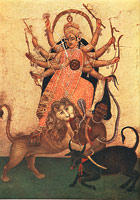 d, nor in any rabbinical or philosophical Jewish works; rather, belief in G-d is the norm of human existence. The word "strange" or "foreign" usually comes with connotations of unwantedness, and in some cases negativity. If the same word is used both for deities and for aliens, and if we have already established a philosophical parallel between them, then it would make sense to say that both concepts, polytheism and belief in aliens, are different ways of looking for the same thing - expressions of subjective philosophy.
"What does a philosophy of subjectivism have to do with both dieties and with aliens," you may ask? The answer is that each society believed in dieties that emphasized (and venerated) certain values, whatever values that they deemed important, values that were related to the physical world around them. In doing so, their philosophies and theologies were necessarily as subjective as their particular physical environment. Similarly, the belief in aliens venerates beings that come from other worlds, other solar systems even, and if those beings have civilizations more advanced than ours and teach us their values, then our values are placed into the realm of subjectivity, which leads to relativism. The fact is that aliens have not arrived here yet, but those people who anticipate them await a sort of "Messianic Age" if you will, not that one that establishes a belief in G-d that unites all humanity, but rather, an age that seeks to liberate people from absolute truth. Human liberation from absolute truth, which brings chaos, is the reason why Judaism has always rejected the subjectivity of the gods, and it is the same reason why Judaism today rejects other modes of relativist thought. The transformation of science into a religion, with aliens being cast as gods, is an example of this other-world-oriented attempt to liberate humanity from absolute truth.
The word "chai" means life (Le-chayim! To life, or cheers!). A "chay zar" would then be a "strange life form," but in the modern Hebrew it refers to an alien in the sense of a green guy with bug-eyes. In the Hebrew language, and therefore in the Jewish mindset, there is a conceptual corellation between the worship of foreign gods and the belief in aliens. It is strange to note that the corellation is unintended because there is no way that three thousand years ago anybody w
 ould know that the people of the 21st century would believe in aliens, but rather it is a product of Judaism's similar response to both polytheism and to the preoccupation with aliens. If the Jews rejected polytheism, and certain forms of polytheism recycle themselves throughout the ages in different forms, then it only makes sense that Jews would also perpetually reject their contemporary manifestations as they popped up. Suffice it to say that "zar" is never a word that is associated with the belief in Hashem anywhere throughout the Tanakh, Talmud, nor in any rabbinical or philosophical Jewish works; rather, belief in G-d is the norm of human existence.
Throughout all human history, deities have come and deities have gone, but G-d has remained a constant; not exotic but captivating, not exacting but expecting, invisible but imaginable, incomparable to anything that we know of, yet we were made in His likeness.
***********************************
* Note: Deities, aliens, demons, vampires, dragons, morbid creatures, and other mythical creatures are all different expressions of these human tendencies. If you pay attention, you will see that sexuality and/or violence is something that they all have in common.
Sunday, June 26, 2005
We Love Tom Cruise! - Veneration of Culture
Thousands of years ago, before the religious expression and philosophy of monotheism was introduced to the world, the different forms of polytheism were the world's forms of spirituality. Each peoples or nation was defined by its deity or deities; Marduk, Tiamat, Ba'alzevuv, Asherah, Molech, Rah, and Osiris, just to name a few. As cultures and peoples developed, deities were passed on from one culture to another, usually going through some form of transformation to make it more applicable to the peoples adopting it. For example, Asherah was a Babylonian goddess that the Assyrians later adopted and renamed "Astarte." Some historians of ancient cultures believe that the Greeks adopted Astarte under the name "Isis," their goddess of love. As cultures adopted deities from previous peoples, they also altered their physical appearance to conform to their specific notion of beauty.
We Shall Make gods in our Images
For example, when statues or two dimensional portrayals of the deities were made, they were shown wearing the contemporary clothing and possessing the body type that the culture associated with beauty; such as certain type of vestments, facial structure, curvy bodies, height, weight, and musculature. Their bodily and facial gestures, as well as their behaviors, indicating values and morals, were also taken into account, be they warlike, peaceful, lustful, or nurturing. In short, the people portrayed their values through artistically presented works of art. The physical world, be in natural or societal (man-made) provided the different sculptors with plenty of models by which to create the images of their deities.
Other religious systems believed in deities that were the rulers of certain natural elements that they depended on for survival, such as the Nile River (Egyptian religion) and proper weather in its due course (many religions). Assyrian, Babylonian, and Egyptian religion were especially concerned about procreation, pregnancy, and birth, and all of them therefore believed in goddesses of fertility. These religions venerated the figure of the woman - an act indicative of the the importance of life.
We can also imagine the correlation between sexual arousal and the physical act of forming the statues of the deities. Consider the statue of the Egyptian god Osiris sporting a huge erection; did a human hand not pass over the length of the member, replicating the erotic act of masturbation? Today we can digitally and electronically create erotic artworks on our computers, and in a way, they are worshipped.
Let Us Make Man in our Image...
Monotheism, starting with Avraham, presented a new concept - that Hashem, the One G-d, has no body or physical presence, and that humanity can gain knowledge of Him by adhering to given instructions that are based in morality and value judgments. We did not make Him, He made us. It is based on the notion that the source of all existence; life, death, sustainability, joy, war, peace, etc., are not scattered all over nature in different forms, but come from one Source, and that Source is Hashem. Therefore, one need not make statues that replicate nature and then venerate them, but rather to direct his or her needs to the Maker of Creation in the form of a plea, question, or statement. This means that Hashem has no figure, all of which are products of the world around them and are therefore value statements of their own. Since He has no figure, and His nature cannot be perceived by casting one's eyes upon anything, physical appearance ceases to be the pinnacle of importance. In this tradition, the human body is not venerated, nor the figure of animals, nor the physical appearance of plants, trees, cosmic bodies, or forces of nature. Physicality takes a backseat, and meaning, purpose, essence, and action take a front seat. Jewish artwork reflects this value; the majority of Jewish (Biblical) artwork tends not to portray biblical figures, such as Avraham, Sarah, Yitzchak, or Moshe (Moses), but rather a scene, nature, a building, or an artistically-rendered verse from the Torah. The importance of the message surpasses the imagery.
*Note: before the Talmud was written down sometime in 1st century Common Era, matters of Jewish law and explanation were entirely oral in nature. The prophets of the Tanakh were most likely excellent orators.
Interaction with Hashem is therefore fundamentally different than the way that a believer in a specific deity (or deities) found communion with them. The value statements of monotheism are instructions, the commandments of the Torah - are independent from the cultural values of the world around them. They stand in opposition to the belief systems and thought-patterns of the surrounding cultures. They have no "color" of their own, but instead are transparent, like water. Like them, their Maker has no color or shape or physically imaginable Presence, He is something that exists outside the normal run of the mill. In fact, He is its Creator. His gender is a human way of talking about Him, and the Kabbalah delves deeper into the understanding of the nature of Hashem with regards to the feminine and masculine aspects. He is not the product of what a particular culture depended on to survive, such as the Nile River or rain in its due course, but He is its source.
Today, one cannot necessarily jeer at the belief systems of the polytheistic religions, but can understand their shortcomings in their veneration of physicality, of the body, and of appearance; thought-processes that failed to yield a holistic understanding of reality, a slice of eternity. This is what monotheism (Judaism, Christianity, and Islam) strive for. Throughout human history, the deities and the values surrounding them have always been recycled through popular forms of expression. Asherah became Astarte became Isis, the erotic statue of the Greek goddess of love cupping her breasts, became the pornstar of the same name. Poseidon's muscular body and courageous appearance is Marvel's Hulk or Arnold Schwarzenegger's killer jaw bone, inflated arms, and bulging six-pack; another porn star. And when these two people have sex, it is when the deities had sex with each other. These are the images that portray our culture's idea of what defines beauty; they are the luxurious material deities of today's secular religion, our society builds monuments to them and worships them. The poster in your room or the picture in the hallway is your household god. What was once a statue of the Egyptian god Osiris, sporting a huge erection, given its shape by a human hand, is now a picture of a naked body on the page of a magazine in your local K-Mart pickup line, touched up by an expensive graphics program. We seek strange forms of spirituality by pushing our sweaty, tightly-covered bodies up against strangers in clubs that encourage the expensive and temporary loss of consciousness, and the end of the night we leave with nothing, sometimes with less than what we came with.
Veneration of Value
We humans are quite sophisticated beings. We are brilliantly-designed enough that we have the capability not only to venerate bodies, appearances, etc., but are able to exalt behavior, attitudes, atmosphere, ambience; this is the absolute wonder of the human being. We can choose to be enamored by values such as sexual exploits, aggression, manipulation, and popularity, but our infinite value as human beings created by Hashem is expressed by our ability to be equally enamored by a just human being, truthfulness, compassion, courage, and overwhelming joy - each of these things come together to form a particular type of lifestyle. If we are going to venerate values, let us find a way to venerate the right ones.
Thousands of years ago, before the religious expression and philosophy of monotheism was introduced to the world, the different forms of polytheism were the world's forms of spirituality. Each peoples or nation was defined by its deity or deities; Marduk, Tiamat, Ba'alzevuv, Asherah, Molech, Rah, and Osiris, just to name a few. As cultures and peoples developed, deities were passed on from one culture to another, usually going through some form of transformation to make it more applicable to the peoples adopting it. For example, Asherah was a Babylonian goddess that the Assyrians later adopted and renamed "Astarte." Some historians of ancient cultures believe that the Greeks adopted Astarte under the name "Isis," their goddess of love. As cultures adopted deities from previous peoples, they also altered their physical appearance to conform to their specific notion of beauty.
We Shall Make gods in our Images
For example, when statues or two dimensional portrayals of the deities were made, they were shown wearing the contemporary clothing and possessing the body type that the culture associated with beauty; such as certain type of vestments, facial structure, curvy bodies, height, weight, and musculature. Their bodily and facial gestures, as well as their behaviors, indicating values and morals, were also taken into account, be they warlike, peaceful, lustful, or nurturing. In short, the people portrayed their values through artistically presented works of art. The physical world, be in natural or societal (man-made) provided the different sculptors with plenty of models by which to create the images of their deities.
Other religious systems believed in deities that were the rulers of certain natural elements that they depended on for survival, such as the Nile River (Egyptian religion) and proper weather in its due course (many religions). Assyrian, Babylonian, and Egyptian religion were especially concerned about procreation, pregnancy, and birth, and all of them therefore believed in goddesses of fertility. These religions venerated the figure of the woman - an act indicative of the the importance of life.
We can also imagine the correlation between sexual arousal and the physical act of forming the statues of the deities. Consider the statue of the Egyptian god Osiris sporting a huge erection; did a human hand not pass over the length of the member, replicating the erotic act of masturbation? Today we can digitally and electronically create erotic artworks on our computers, and in a way, they are worshipped.
Let Us Make Man in our Image...
Monotheism, starting with Avraham, presented a new concept - that Hashem, the One G-d, has no body or physical presence, and that humanity can gain knowledge of Him by adhering to given instructions that are based in morality and value judgments. We did not make Him, He made us. It is based on the notion that the source of all existence; life, death, sustainability, joy, war, peace, etc., are not scattered all over nature in different forms, but come from one Source, and that Source is Hashem. Therefore, one need not make statues that replicate nature and then venerate them, but rather to direct his or her needs to the Maker of Creation in the form of a plea, question, or statement. This means that Hashem has no figure, all of which are products of the world around them and are therefore value statements of their own. Since He has no figure, and His nature cannot be perceived by casting one's eyes upon anything, physical appearance ceases to be the pinnacle of importance. In this tradition, the human body is not venerated, nor the figure of animals, nor the physical appearance of plants, trees, cosmic bodies, or forces of nature. Physicality takes a backseat, and meaning, purpose, essence, and action take a front seat. Jewish artwork reflects this value; the majority of Jewish (Biblical) artwork tends not to portray biblical figures, such as Avraham, Sarah, Yitzchak, or Moshe (Moses), but rather a scene, nature, a building, or an artistically-rendered verse from the Torah. The importance of the message surpasses the imagery.
*Note: before the Talmud was written down sometime in 1st century Common Era, matters of Jewish law and explanation were entirely oral in nature. The prophets of the Tanakh were most likely excellent orators.
Interaction with Hashem is therefore fundamentally different than the way that a believer in a specific deity (or deities) found communion with them. The value statements of monotheism are instructions, the commandments of the Torah - are independent from the cultural values of the world around them. They stand in opposition to the belief systems and thought-patterns of the surrounding cultures. They have no "color" of their own, but instead are transparent, like water. Like them, their Maker has no color or shape or physically imaginable Presence, He is something that exists outside the normal run of the mill. In fact, He is its Creator. His gender is a human way of talking about Him, and the Kabbalah delves deeper into the understanding of the nature of Hashem with regards to the feminine and masculine aspects. He is not the product of what a particular culture depended on to survive, such as the Nile River or rain in its due course, but He is its source.
Today, one cannot necessarily jeer at the belief systems of the polytheistic religions, but can understand their shortcomings in their veneration of physicality, of the body, and of appearance; thought-processes that failed to yield a holistic understanding of reality, a slice of eternity. This is what monotheism (Judaism, Christianity, and Islam) strive for. Throughout human history, the deities and the values surrounding them have always been recycled through popular forms of expression. Asherah became Astarte became Isis, the erotic statue of the Greek goddess of love cupping her breasts, became the pornstar of the same name. Poseidon's muscular body and courageous appearance is Marvel's Hulk or Arnold Schwarzenegger's killer jaw bone, inflated arms, and bulging six-pack; another porn star. And when these two people have sex, it is when the deities had sex with each other. These are the images that portray our culture's idea of what defines beauty; they are the luxurious material deities of today's secular religion, our society builds monuments to them and worships them. The poster in your room or the picture in the hallway is your household god. What was once a statue of the Egyptian god Osiris, sporting a huge erection, given its shape by a human hand, is now a picture of a naked body on the page of a magazine in your local K-Mart pickup line, touched up by an expensive graphics program. We seek strange forms of spirituality by pushing our sweaty, tightly-covered bodies up against strangers in clubs that encourage the expensive and temporary loss of consciousness, and the end of the night we leave with nothing, sometimes with less than what we came with.
Veneration of Value
We humans are quite sophisticated beings. We are brilliantly-designed enough that we have the capability not only to venerate bodies, appearances, etc., but are able to exalt behavior, attitudes, atmosphere, ambience; this is the absolute wonder of the human being. We can choose to be enamored by values such as sexual exploits, aggression, manipulation, and popularity, but our infinite value as human beings created by Hashem is expressed by our ability to be equally enamored by a just human being, truthfulness, compassion, courage, and overwhelming joy - each of these things come together to form a particular type of lifestyle. If we are going to venerate values, let us find a way to venerate the right ones.
Subscribe to:
Posts (Atom)




_sinister%20mask%20(kkk)1.jpg)

_sinister%20mask%20(kkk).jpg)